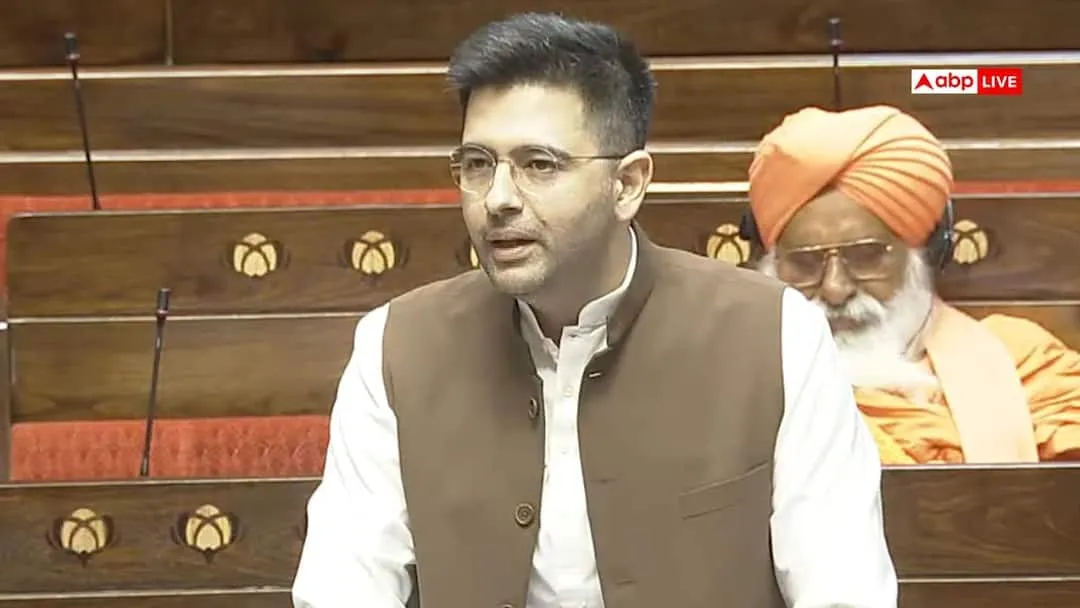
In the bustling chambers of the Rajya Sabha, where decisions echo and linger, Raghav Chadha stood up to address his peers. The air was thick with anticipation as members gathered for the election of a new Deputy Chairman. This wasn’t just another day in Indian politics; it was a moment steeped in personal history.
Chadha, a member of the Aam Aadmi Party (AAP), had recently faced a shift in his political landscape—he was removed from his position as Deputy Leader. Yet here he was, congratulating Harivansh on his unopposed election to a third term as Deputy Chairman. “I congratulate Harivansh ji on his third term as Deputy Chairman,” he stated, voice steady but underlined with a hint of nostalgia.
But beneath the surface of politeness lay complexity. His relationship with Harivansh was anything but simple. “My personal relationship with Harivansh ji has been a bit bittersweet,” he admitted candidly. Those words hung in the air—bittersweet: a taste that’s both sweet and sour, much like their shared political journey.
Chadha’s acknowledgment of this duality didn’t just reflect on their past interactions; it hinted at future possibilities. “I will try to make this bittersweet relationship a sweet one,” he added, offering a glimmer of hope for reconciliation.
As the session progressed, he made a request that resonated with many: “If you could give us a couple of extra minutes after the bell rings, we could present our points more strongly.” It was an appeal not just for time but for understanding—a plea to acknowledge the nuances of political discourse.
The room shifted slightly at his words. Some nodded in agreement; others exchanged glances that spoke volumes. In politics, timing is everything, and sometimes, so is tone.
Observers noted that this moment wasn’t merely about parliamentary procedure—it was about relationships forged and tested within those walls. The Punjab Government and the Punjab-Haryana High Court loom large in their shared narrative, intertwining regional issues with personal dynamics.
What remains to be seen is how these sentiments will play out in future sessions. Will Chadha’s efforts to sweeten this relationship bear fruit? Or will it remain an unresolved tension within the corridors of power?
Details remain unconfirmed regarding any formal changes to their working relationship or future collaborations. For now, all eyes are on how these dynamics unfold within the larger framework of Indian politics.