As the sun began to set on a bustling April evening in 2026, the atmosphere in New Delhi was charged with anticipation. The Union Government was preparing to unveil a transformative proposal that could reshape the very fabric of Indian democracy. Just days before the Special Session of Parliament on April 16 and 17, the government announced its intention to introduce a Bill that would increase the strength of the Lok Sabha from its current 543 members to an ambitious 850. This move, which has been met with both enthusiasm and skepticism, marks a significant shift in the political landscape.
The proposed amendment seeks to delete the long-standing requirement that delimitation must follow the post-2026 Census, a stipulation established by the 84th Amendment Act of 2001. This amendment had effectively frozen constituency boundaries until the first census after 2026, a decision that many argued stifled representation in a rapidly changing demographic landscape. As the latest published census was conducted in 2011, the need for a recalibration of parliamentary constituencies has become increasingly urgent.
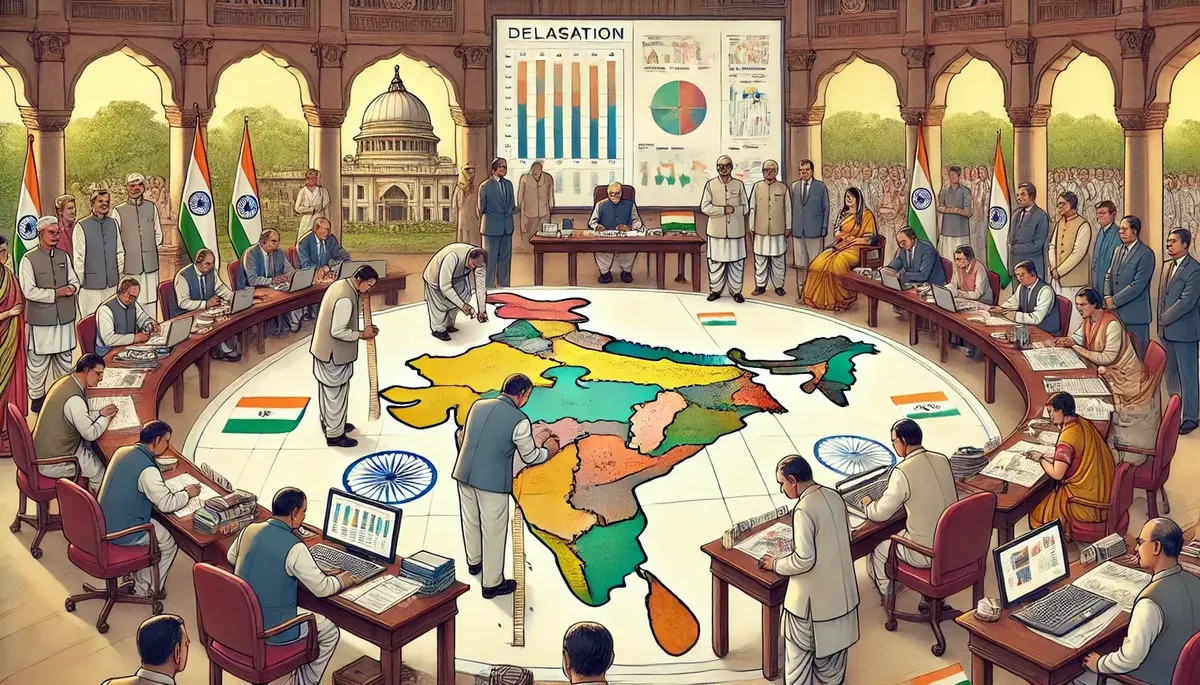
At the heart of this proposed Bill is an amendment to Article 82 of the Constitution, which governs the readjustment of parliamentary constituencies following each Census. The Bill not only aims to increase the total number of Lok Sabha seats but also proposes a new structure: 815 members from the states and 35 from Union Territories. This reallocation is poised to reflect the current population dynamics more accurately, ensuring that every voice is heard in the corridors of power.
Moreover, the Bill introduces a groundbreaking provision for 33% reservation for women in the Lok Sabha and State Assemblies, a long-awaited step towards gender equality in Indian politics. This initiative is expected to empower women and encourage their participation in governance, addressing a significant gap in representation that has persisted for decades.
The Delimitation Commission, which will be established under this Bill, will be chaired by a person who is or has been a Judge of the Supreme Court, ensuring that the process is conducted with the utmost integrity and impartiality. Once the Commission publishes its orders in the Gazette of India, those orders will have the force of law and cannot be challenged in any court, a provision that underscores the government’s commitment to streamline the delimitation process.
As the nation gears up for the Special Session, the implications of these proposed changes are profound. For many citizens, especially those in underrepresented regions, the prospect of increased representation is a beacon of hope. However, the move has also sparked debates about the timing and motivations behind such a significant overhaul of the electoral framework.
The current composition of the Lok Sabha, based on the 1971 Census, has long been criticized for failing to reflect the demographic realities of a nation that has undergone substantial changes in the last five decades. The next census is expected to conclude in 2027, making the urgency of this Bill even more pronounced. As the government prepares to take this pivotal step, the eyes of the nation are fixed on the Parliament, awaiting the outcome of the discussions that will shape the future of Indian democracy.
In this moment of potential change, the voices of the citizens resonate louder than ever. The proposed delimitation is not just a technical adjustment; it is a fundamental rethinking of how representation is defined and delivered in India. As the Special Session approaches, the stakes are high, and the outcome will undoubtedly influence the political landscape for years to come.