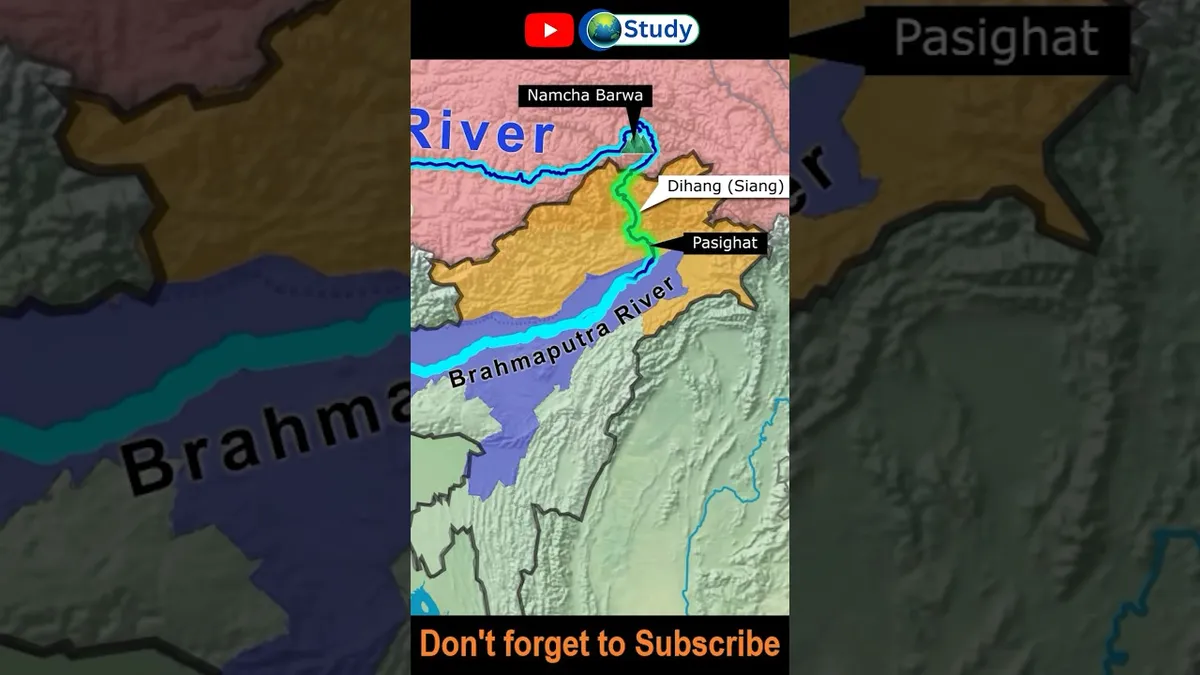
The Brahmaputra, one of the major rivers in India, plays a crucial role in the geography and culture of the region. It is often mentioned alongside the Ganges, which is recognized as the longest and holiest river in the country. The significance of these rivers extends beyond their physical presence; they are deeply woven into the fabric of Indian life.
Flowing through diverse landscapes, the Brahmaputra stretches for hundreds of kilometers, providing vital resources to millions. Its waters are essential for agriculture, drinking, and industry, making it a lifeline for many communities. The river’s journey is not just a geographical one; it is also a historical narrative that has shaped civilizations along its banks.
India is home to several major rivers, including the Brahmaputra, Ganges, Sindhu, Godavari, Krishna, Narmada, Yamuna, and Kaveri. Each of these rivers has its own unique story and significance, contributing to the rich tapestry of Indian culture and history.
Interestingly, there is another river in India that disappears into the desert after 495 kilometers, but its name remains unspecified. This fact adds an intriguing layer to the understanding of India’s river systems, highlighting the diverse hydrological features present in the country.
As observers continue to study the Brahmaputra and its counterparts, the importance of these waterways in addressing environmental and resource management issues becomes increasingly clear. The challenges posed by climate change and human activity are prompting discussions about sustainable practices to protect these vital ecosystems.
While the Brahmaputra stands as a symbol of life and culture, the uncertainties surrounding the unnamed river that vanishes into the desert remind us of the complexities of India’s water systems. Details remain unconfirmed, leaving room for further exploration and understanding of these natural wonders.