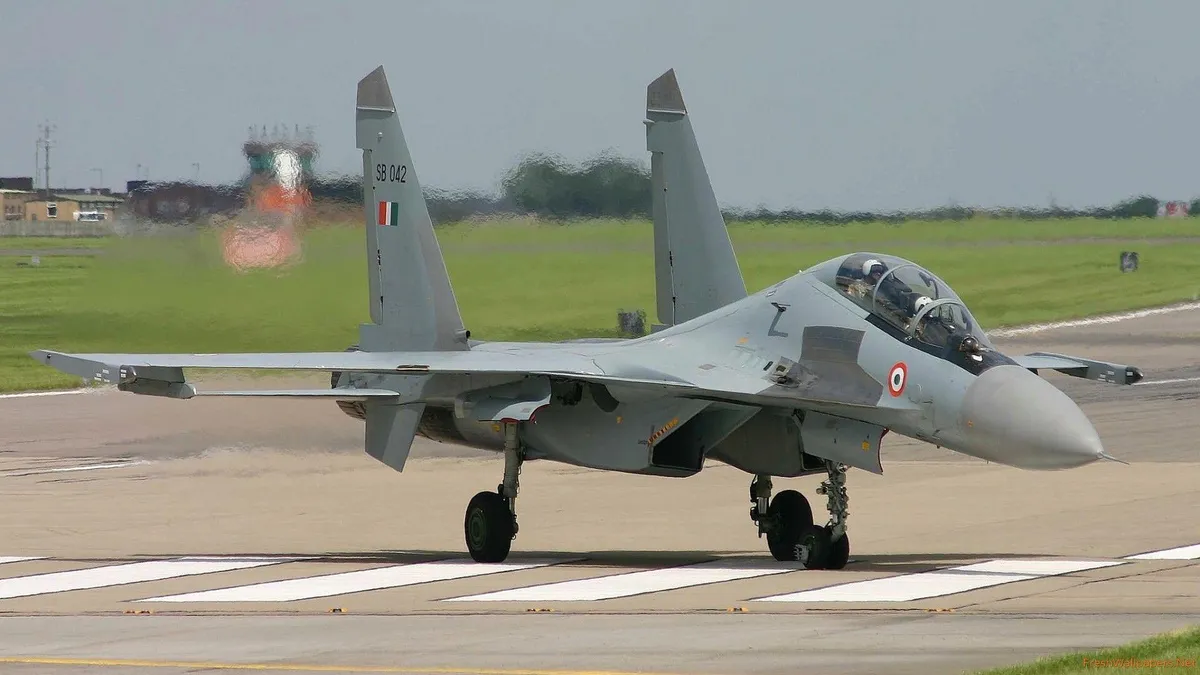
It was a quiet afternoon at Pune airport when the unexpected happened. An Indian Air Force aircraft made a hard landing, sending shockwaves through the base. The undercarriage failure—a rare but critical incident—prompted immediate action. The airport was temporarily closed, and crews scrambled to assess the situation. They estimated it would take four to five hours to move the aircraft and restore the runway. But amidst this turmoil, a more significant development was unfolding.
GE Aerospace, a name synonymous with aviation excellence, has been in partnership with the Indian Air Force for over four decades. This long-standing relationship is about to deepen even further. Recently, they inked an agreement to establish an in-country depot facility for F404-IN20 engines, which are vital for the IAF’s Light Combat Aircraft Tejas fleet. This move is expected to enhance the repair and overhaul infrastructure significantly—bringing capabilities closer to home.
The facility will be owned, operated, and maintained by the Indian Air Force itself. This self-reliance is crucial for a nation that strives to bolster its defense capabilities while reducing dependency on foreign entities. The Tejas fleet has been a point of pride for India—an embodiment of indigenous technological advancement—and now it will have the support it needs right within the country.
Meanwhile, as officials addressed the media regarding the Pune incident, they reiterated their commitment to safety and operational readiness. The IAF Chief had just undertaken a familiarisation flight in a Boeing F-15EX Eagle II fighter aircraft at Nellis Air Force Base—a testament to India’s evolving military prowess. The F-15EX represents cutting-edge technology in multirole combat capability, boasting a top speed of Mach 2.5 and a service ceiling of 50,000 feet.
With a maximum payload capacity of 29,500 pounds (or 13,381 kilograms), this advanced fighter jet symbolizes not just strength but also strategic foresight. As discussions about defense partnerships continue between India and the U.S., this aircraft stands as a beacon of what’s possible when nations collaborate in aerospace innovation.
Observers are keenly watching how these developments will unfold. With GE Aerospace’s infrastructure improvements set against the backdrop of recent incidents like that at Pune airport, there’s an air of urgency surrounding operational efficiency and safety protocols within the IAF. Officials have hinted that as this new facility comes online, we can expect faster turnaround times for repairs—ultimately enhancing readiness.
As India navigates its path in an increasingly complex geopolitical landscape, these strategic alliances become paramount. The collaboration with GE Aerospace isn’t just about engines; it’s about building resilience and capability from within. In times of uncertainty—when every second counts—the ability to maintain one’s fleet effectively could be the difference between success and failure on various fronts.
The future looks promising for the Indian Air Force as it embarks on this new chapter with GE Aerospace. While details remain unconfirmed regarding some aspects of their partnership, one thing is clear: strengthening domestic capabilities is now more essential than ever.