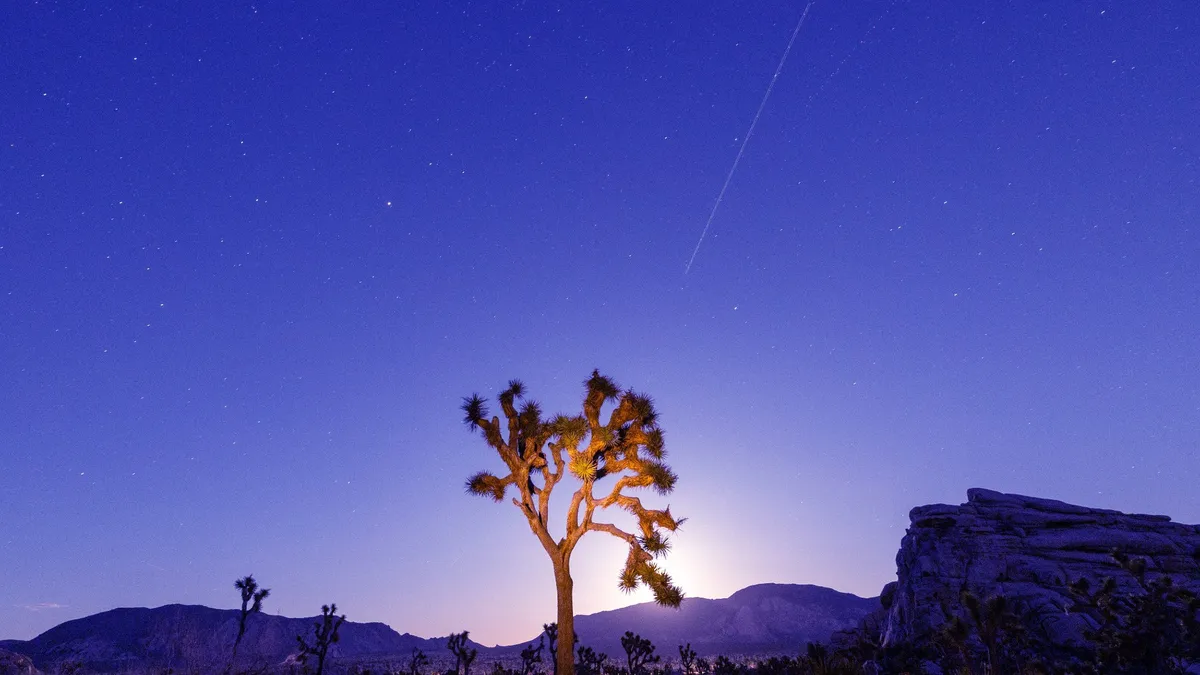
April 21 is just around the corner, and with it comes a spectacular celestial event—the Lyrid meteor shower. This year, it peaks just after midnight, as the radiant rises high in the sky. For those lucky enough to be under clear conditions, expect to see between 15 and 20 meteors streaking across the night.
But this isn’t just any meteor shower. The Lyrids have been gracing our skies for over 2,700 years, with historical records tracing back to 687 BC. They’re considered one of the oldest known meteor showers—an ancient spectacle that has captivated generations.
The meteors appear to emanate from the constellation Lyra, closely associated with its brightest star, Vega. As you gaze upwards, you might find yourself lost in thought—wondering how many others have watched this same display before you.
These meteors are known for their speed and brightness; they often leave glowing trails that linger for moments after they blaze through the atmosphere. Under ideal conditions, observers could potentially witness up to 100 meteors per hour—though averages hover around 18.
To catch the best views, it’s recommended to let your eyes adjust to the darkness for at least 30 minutes. This way, when you finally look up at the sky, your vision will be sharp enough to catch every fleeting moment.
The Lyrids are remnants of Comet C/1861 G1 Thatcher—their parent comet—which means each meteor is a tiny piece of cosmic history hurtling towards Earth. They remind us that we’re part of something larger than ourselves.
As excitement builds for this year’s shower, many are preparing their blankets and cameras for a night of stargazing. Local astronomy clubs are even organizing viewing events to help enthusiasts share in this age-old tradition.
However, there’s always a hint of uncertainty with celestial events. Weather conditions can change rapidly; clouds may obscure the view or rain may dampen plans. Details remain unconfirmed as we approach peak viewing time.
So mark your calendars—April 21 and 22 promise to be nights filled with wonder and awe as the Lyrids light up our skies once again.