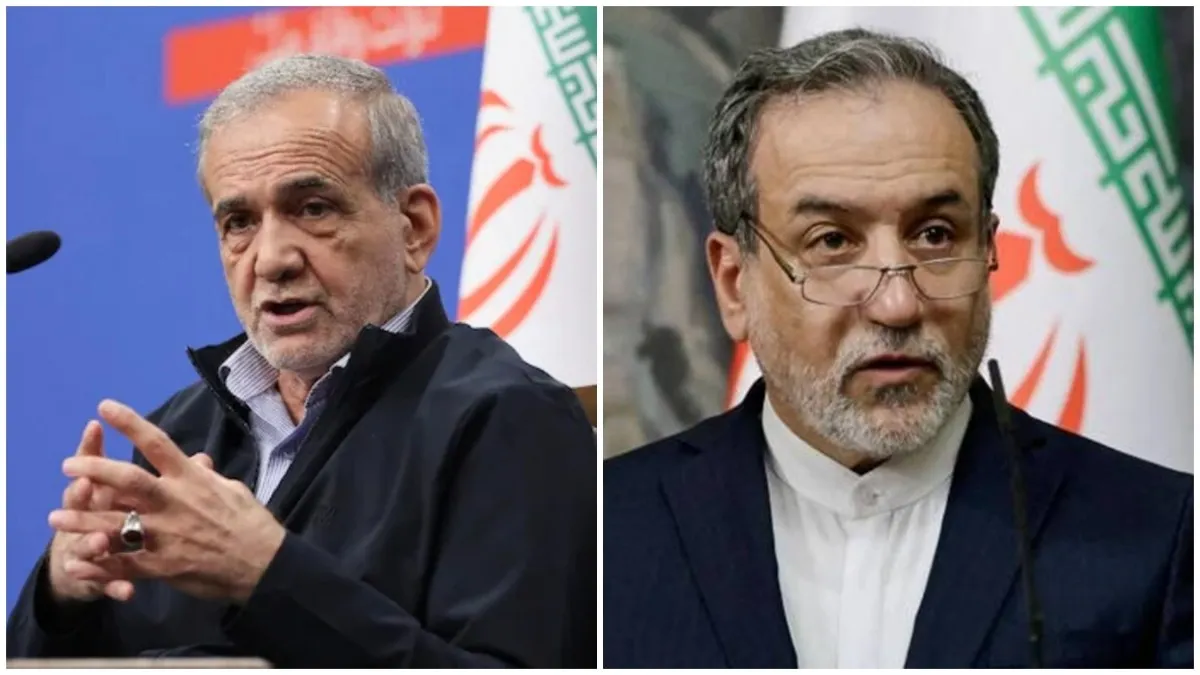
“Pezeshkian has told close associates that he will dismiss Araghchi if such conduct continues,” a source revealed, highlighting the mounting pressure on Iran’s Foreign Minister amid growing internal discord.
As of May 1, 2026, Tehran finds itself in a precarious situation. President Masoud Pezeshkian and Parliament Speaker Mohammad Bagher Ghalibaf are pushing hard for Araghchi’s ouster, accusing him of being too aligned with Revolutionary Guard Commander Ahmad Vahidi. This rift reflects deeper issues within Iran’s leadership regarding its strategy in ongoing Iran-US negotiations.
Araghchi, who coordinated directly with Vahidi without informing the president, has drawn ire from key political figures. Pezeshkian believes Araghchi has behaved more like an aide to Vahidi than a cabinet minister, further complicating the already tense political landscape.
Key facts:
- The Revolutionary Guards are reportedly controlling key managerial positions due to the critical situation.
- Ghalibaf resigned as head of the negotiating team after being reprimanded for including nuclear discussions.
- A faction of lawmakers aligned with hardline politician Saeed Jalili has refused to support the negotiating team.
- Araghchi traveled alone to Islamabad on April 24 to deliver Tehran’s proposal to Pakistani officials, which was ultimately rejected by the United States president.
Yet, amidst this turmoil, Araghchi remains vocal about Iran’s international relations. He stated that cooperation between Iran and Russia continues to expand amid regional uncertainty. “The United States failed to achieve its objectives in the recent conflict with Iran,” he asserted, hinting at a broader narrative of resilience.
The meeting between Iranian officials and Russian Foreign Minister Sergey Lavrov was described as constructive and practical—an indication that despite internal strife, some diplomatic efforts persist.
With divisions within Iran’s leadership evident and tensions escalating over negotiations with the United States, it’s clear that this political drama is far from over. The next steps in this evolving story will significantly impact both regional stability and Iran’s nuclear program.