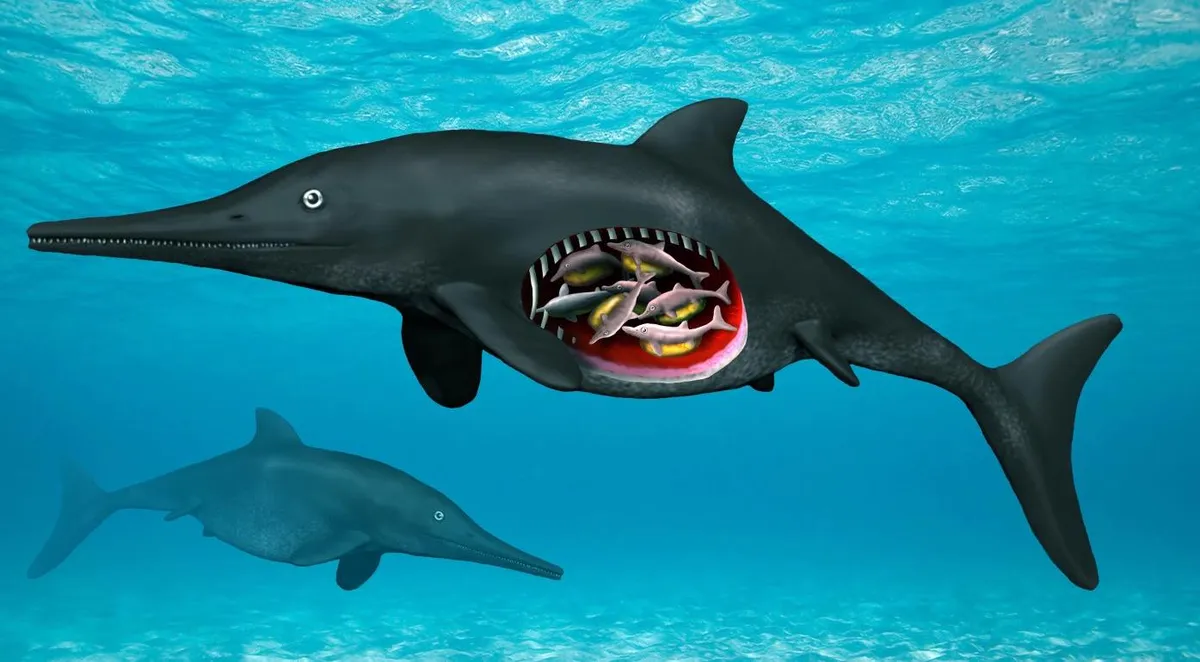
A remarkable 180 million year old ichthyosaur fossil discovered in Germany reveals the incredible story of survival for this ancient marine predator. The specimen, belonging to the Temnodontosaurus genus, lived during a time when the Jurassic seas were teeming with diverse life forms.
This fossil, unearthed at the Mistelgau clay pit near Bayreuth, shows evidence of severe jaw injuries—suggesting that this ichthyosaur faced significant challenges during its lifetime. Researchers found fragments of the skull, lower jaw, shoulder girdle, forefins, spine, and over 100 teeth. It’s a treasure trove for paleontologists eager to understand more about these ancient marine reptiles.
The ichthyosaur could grow over 20 feet (around 6.5 meters) long and bore a striking resemblance to modern dolphins. This discovery not only adds to our knowledge of Jurassic sea life but also indicates that ichthyosaurs might have survived longer than previously believed.
As one researcher noted, “This well-preserved specimen… shows evidence of injuries and adaptations, suggesting survival despite physical challenges.” The implications of this find are vast—offering insights into the resilience of ancient marine predators.
In light of this discovery, experts anticipate further research will delve into how these creatures adapted to their environment and overcame injuries. The fossil serves as a reminder of the complexities within prehistoric ecosystems and the stories they hold.