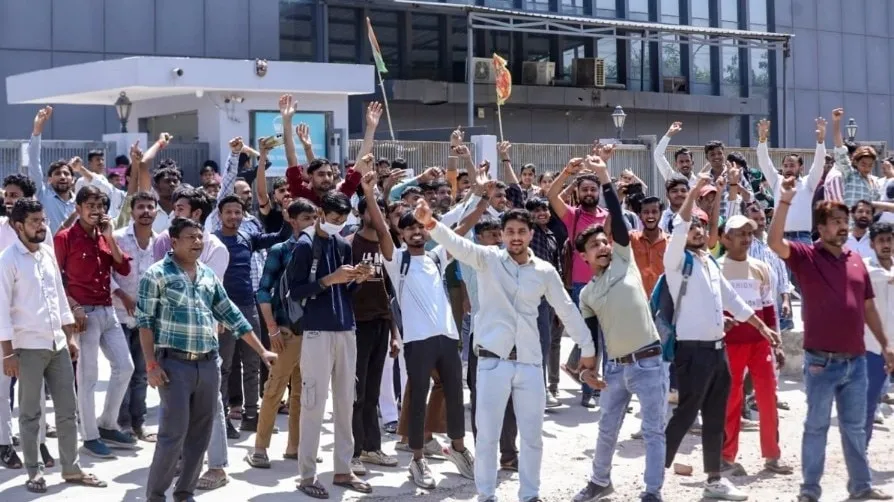
In a significant escalation of unrest, Noida witnessed a major labour protest on April 13, 2026, that brought traffic to a near standstill for nearly six hours. The protests, which began on April 9, were sparked by workers voicing their frustrations over rising living costs and stagnant wages. As demonstrators took to the streets, the situation quickly escalated, affecting key corridors in the region.
The worst-affected areas included the bustling Delhi-Noida Link Road, the DND flyway, and the Delhi-Meerut Expressway. Commuters faced long tailbacks stretching several kilometres, with some reporting that their usual 45-minute drive from Indirapuram to Okhla took an agonizing two and a half hours. Neha Gupta, a frustrated commuter, expressed her dismay, stating, “There was no proper advisory in the morning. By the time we realised what was happening, we were already stuck in the middle of it.” The Delhi Traffic Police issued its first advisory at 11:48 am, but by then, many were already caught in the chaos.
As the protests intensified, the Local Intelligence Unit of the Noida Police faced criticism for failing to provide timely intelligence, which contributed to the breakdown of law and order. The unrest resulted in vandalism across 80 factories in Greater Noida and Noida, raising concerns about the broader implications of the protests. Uttar Pradesh Labour Minister Anil Rajbhar suggested that the protests might be part of a “larger conspiracy,” even hinting at a “possible Pakistan link” to the unrest. “Forces troubled by the growing popularity of the double-engine government are conspiring to create instability,” Rajbhar stated.
Despite the chaos, Noida police officials assured that adequate police deployment was ensured after earlier disruptions. However, the effectiveness of these measures remains in question as the protests continued to unfold. The situation began to ease in the mid-afternoon, with traffic normalizing within 1.5 hours after the protests subsided. Yet, the impact was felt far beyond the roads, disrupting school operations in both Delhi and Noida.
The protests reflect a growing discontent among workers who are grappling with the dual challenges of rising living costs and stagnant wages. As the government faces mounting pressure to address these issues, the protests serve as a stark reminder of the urgent need for dialogue and resolution. The exact nature of the “larger conspiracy” mentioned by the Labour Minister is unclear, and details remain unconfirmed.
As the dust settles on this tumultuous day, the community is left to ponder the implications of these protests. The voices of the workers, once silenced by the chaos, now echo through the streets of Noida, demanding attention and action. The government’s response will be crucial in determining whether this unrest will lead to meaningful change or further division.