Australia’s Batting Under Scrutiny
Australia is contemplating alterations to its batting lineup following a recent defeat to Bangladesh in Darwin. Captain Pat Cummins acknowledged that the team’s performance in the match continued a broader pattern of batting struggles. This discussion comes early in their extensive year-long schedule of Test matches, prompting selectors to consider potential interventions.
The decision to bat first on the Darwin drop-in pitch was made by Cummins, a choice he stated he does not regret. However, his counterpart, Najmul Shanto, expressed relief that Bangladesh was not asked to bat first. Shanto indicated he would have chosen to bowl first, noting that ball-tracking data from the opening session suggested significant seam movement, comparable to conditions at the MCG Ashes pitch before lunch last summer.
Despite the initial conditions, batting became more favourable after the first couple of hours. Cummins lamented the early advantage his top-order conceded to Bangladesh. Australia lost four wickets before the first interval on day one. In their first innings, they were dismissed for 198 runs in 53 overs, failing to surpass 200. Their second innings saw them all out for 284 runs in 95.1 overs, not reaching 300.
The nine-wicket defeat marked only the third loss for Australia in their last 14 Tests. Cummins noted that once a team falls behind on a good wicket against a strong opponent, it becomes challenging to regain momentum. Only Steve Smith, with scores of 71 and 44, and Cameron Green, who scored a commanding 104 in the second innings after an early exit on day one, managed to score more than 31 runs for Australia in the match.
Performance Trends and Potential Adjustments
Significant concerns for Australia lie with their top-order batsmen. Two of their top three players, Jake Weatherald and Marnus Labuschagne, have maintained an average below 27 since the beginning of last summer’s Ashes series. Ahead of the upcoming Mackay Test, which is scheduled to start on Saturday, Cummins suggested that selectors might explore options beyond the 13-man squad initially chosen for the Darwin match.
Cummins articulated the dilemma facing the team, balancing the fact that it was only one Test match against the observation that it represents a recurring trend. The question for selectors over the next few days is whether immediate intervention is necessary or if the current group should be given more time to prove themselves. He indicated that coaches would work individually with each player, acknowledging that each dismissal occurred differently. However, he made it clear that the batting unit is not performing as desired.
He expects the batsmen to convene, discuss their performance, review footage, and assess their methods and approaches from the past week. If changes to their style are required, Cummins stressed the need for prompt action within the next week or so. Josh Inglis, who was the spare batter in the squad, has a first-class average of 15.22 when batting in the top four, a position he has occupied only nine times. His eight centuries in first-class cricket have all come from batting at number five or lower. His most recent Test appearance, during the Ashes in Adelaide, saw him bat at number seven.
Other potential top-order batsmen within the broader Australian group who participated in training sessions in Brisbane before the Top End series include Matthew Renshaw. Cooper Connolly, who batted at number eight in his sole Test in Galle last year, also scored a century in an ODI against Bangladesh from the number three position in June. Further afield, options like Campbell Kellaway, who was dismissed for a duck by Taskin Ahmed in a Cricket Australia XI game in Darwin, and Nathan McSweeney, currently playing county cricket for Northamptonshire, could be considered.
Cummins highlighted the availability of many players ready to step in, noting that the squad in Brisbane included individuals involved in both red-ball and white-ball setups, fostering interaction and connection with Australian coaches. He emphasized that selections are not limited to the six players outside the 13-man Test squad who have been training with the main group, indicating that choices can be made from a wider pool of talent.
Match Context and World Test Championship Implications
Cummins admitted the difficulty in assessing the Darwin pitch, which had hosted only one first-class match in the preceding two decades. That previous game, a drawn contest between Australia A and Sri Lanka A last year, did not exhibit the same early seam movement. He explained that at an irregular Test venue, reading the pitch is challenging, requiring a balance between first and fourth innings conditions.
He initially believed that with some grass, the pitch might be tough for the first hour but otherwise a good batting track. The expectation was that the pitch might crack and offer spin on days four and five, which largely proved to be the case. Despite the outcome, Cummins reiterated he would likely make the same decision to bat first, hoping the team could bat longer after navigating the initial tough period.
Concerns about Cummins’s fitness were dismissed by the captain, who did not bowl during Bangladesh’s run chase, attributing it to a desire to improve their over-rate. He did, however, mention that the inclusion of Scott Boland for the second Test next week is a possibility. The NRMA Insurance Bangladesh Test series saw Bangladesh defeat Australia by nine wickets in Darwin. The second Test is scheduled from August 22-26 at the Great Barrier Reef Arena in Mackay, starting at 10 am local time.
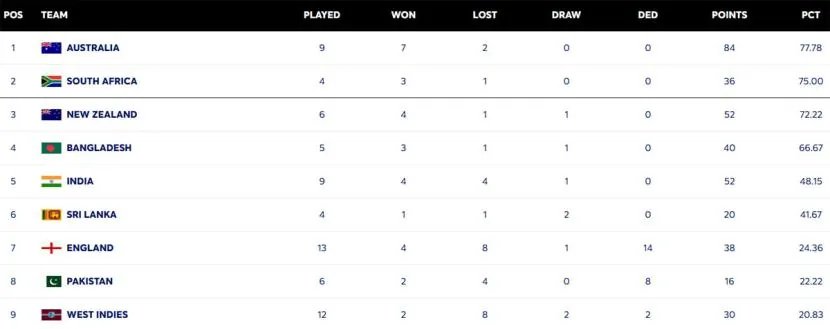
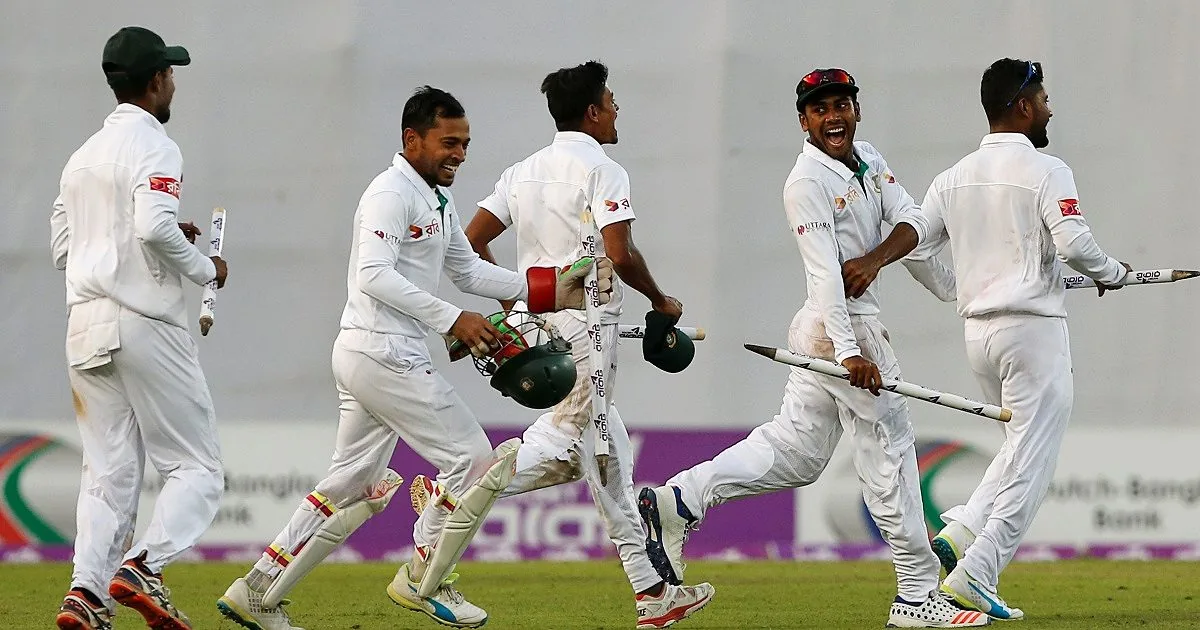
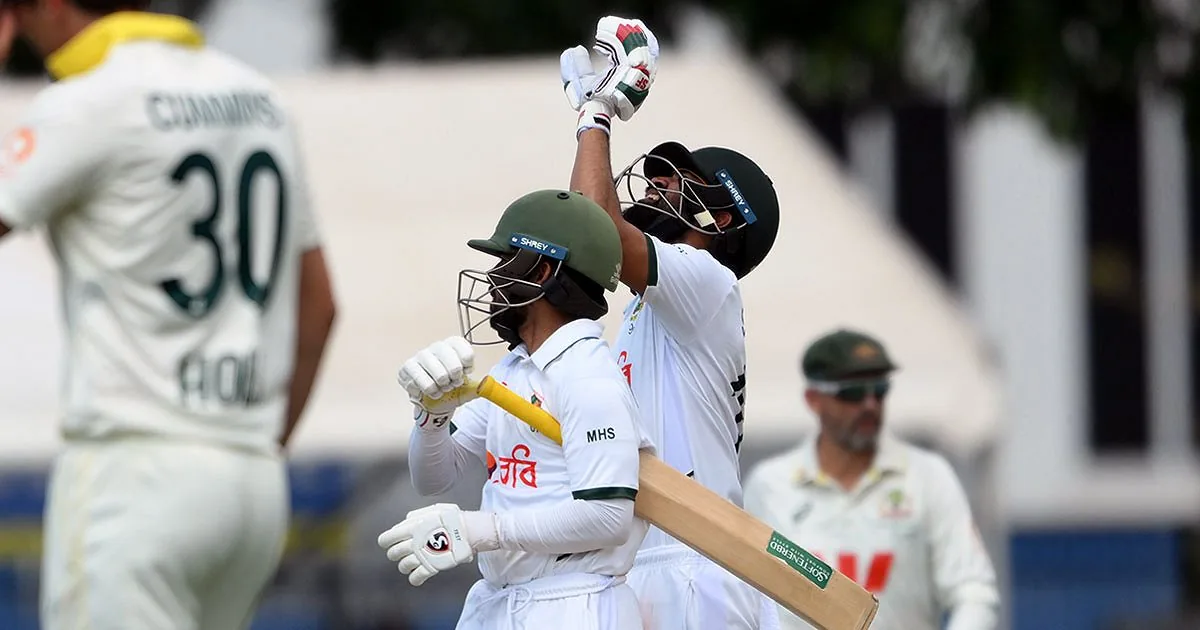
This historic nine-wicket victory for Bangladesh in Darwin marks their first-ever Test win on Australian soil. This landmark achievement has significantly impacted the ICC World Test Championship standings, propelling Bangladesh above India into fourth place. Bangladesh now holds a points percentage of 66.67, with three wins from five matches. Two-time finalists India are currently in fifth position with a points percentage of 48.15, having secured four wins from nine Tests. Despite their defeat, Australia continues to lead the WTC standings with a points percentage of 77.78, including seven wins from nine Tests.
The Australia squad for the series includes Pat Cummins (captain), Scott Boland, Alex Carey, Cameron Green, Josh Hazlewood, Travis Head, Josh Inglis, Marnus Labuschagne, Nathan Lyon, Steve Smith, Mitchell Starc, Jake Weatherald, and Beau Webster. The Bangladesh squad features Najmul Hossain Shanto (captain), Mehidy Hasan Miraz (vice-captain), Soumya Sarkar, Shadman Islam, Tanzid Hasan Tamim, Mominul Haque, Mushfiqur Rahim, Litton Das, Amite Hasan, Jaker Ali, Taijul Islam, Taskin Ahmed, Hasan Mahmud, Syed Khaled Ahmed, Ebadot Chowdhury, Shoriful Islam, and Musfik Hasan. The ICC World Test Championship standings were updated on August 16, 2026.
Source: cricket.com.au