Who is involved
In the weeks leading up to March 21, 2026, the US market was riding a wave of cautious optimism. Analysts had anticipated a steady recovery, buoyed by positive economic indicators and a relatively stable geopolitical landscape. The Dow Jones Industrial Average was hovering around 45,577.47, while the S&P 500 and NASDAQ Composite were also showing signs of resilience at 6,506.48 and 21,647.61, respectively. Investors were hopeful that the worst of the market volatility was behind them.
However, this sense of stability was abruptly shaken when President Trump announced a delay in military action against Iranian power plants. This announcement, intended to ease fears of escalating conflict in the Middle East, had an immediate and profound impact on the market. The Dow Jones fell below the critical support level of 46,450, while the S&P 500 broke below 6,600, and the NASDAQ Composite approached a crucial support zone at 21,350-21,200. The US 10-Year Treasury Yield surged to 4.38 percent, reflecting heightened investor anxiety.
In the wake of Trump’s announcement, the market experienced a dramatic turnaround. The Dow Jones rebounded, rising by 1,021.70 points, or 2.24 percent, to close at 46,599.17. Similarly, the S&P 500 gained 136.26 points, or 2.09 percent, reaching 6,642.74, while the NASDAQ Composite advanced 493.02 points, or 2.28 percent, to finish at 22,140.63. This swift recovery highlighted the market’s sensitivity to geopolitical developments and the potential for rapid shifts in investor sentiment.
Experts weighed in on the situation, noting that while the market reacted positively to the news of a delay in military action, the underlying uncertainties remained. Chris Larkin, a market analyst, remarked, “The market woke up to some potentially good news out of the Middle East on Monday. But follow-through on any relief rally will likely require tangible follow-through on the geopolitical front.” This sentiment underscores the precarious nature of the current market environment, where optimism can quickly turn to caution.
Adding to the complexity of the situation, Iranian media challenged Trump’s version of events, claiming that no negotiations had taken place. Mohammad-Bagher Ghalibaf, a prominent Iranian politician, stated, “No negotiations have been held with the US, and fakenews is used to manipulate the financial and oil markets and escape the quagmire in which the US and Israel are trapped.” This statement raises questions about the validity of the optimistic market response and the potential for future volatility.
As the dust settles from these recent developments, the market’s trajectory remains uncertain. Elias Haddad, another market expert, commented, “It’s clearly jawboning in the face of the meltdown that we’ve seen. We’re seeing a bit of a knee-jerk reaction to this positive news.” This highlights the fragility of the current market conditions, where even a glimmer of hope can lead to significant fluctuations.
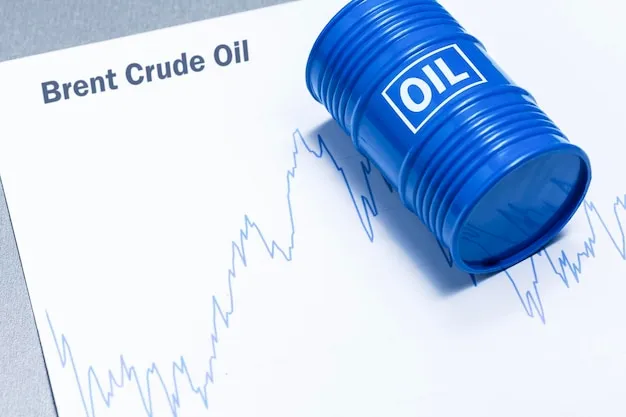
In the broader context, the sharp decline in oil prices, which fell by 10.5 percent following Trump’s announcement, further complicates the economic landscape. Oil prices are often a barometer for market health, and their decline could signal deeper issues within the global economy. Investors are left grappling with the implications of these geopolitical tensions and their potential impact on the US market moving forward.
As we continue to monitor the situation, it is clear that the US market is at a crossroads. The interplay between geopolitical events and economic indicators will be crucial in shaping investor sentiment and market performance in the coming weeks. Details remain unconfirmed, but the stakes are high as the world watches closely.