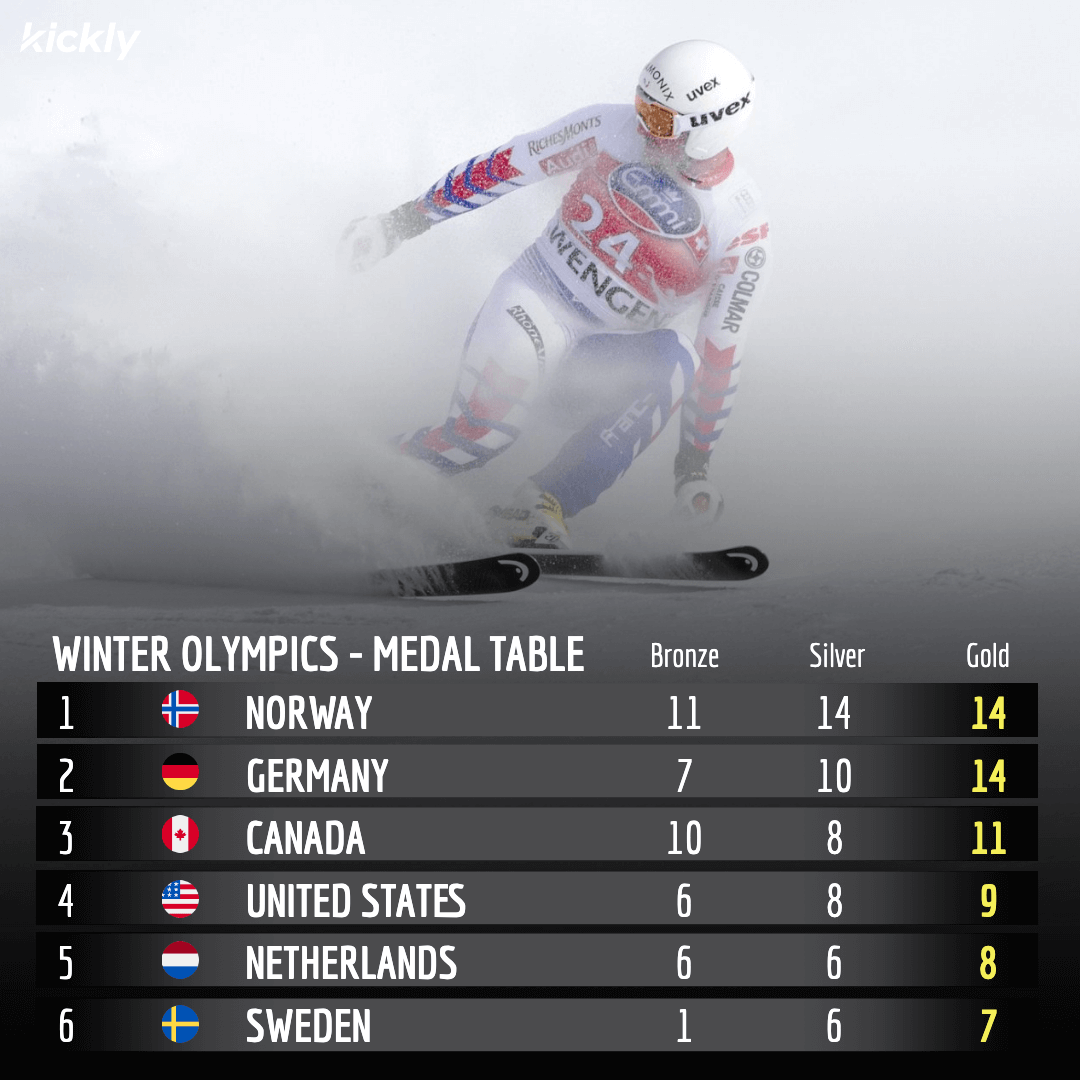
The Importance of the Medal Table
The Winter Olympics, held every four years, showcases the world’s best winter athletes competing in a variety of sports, including skiing, snowboarding, and ice hockey. The medal table is a crucial aspect of the games, providing a clear summary of each country’s performance and highlighting national pride and prowess in winter sports.
Key Highlights from the 2022 Winter Olympics
The 2022 Winter Olympics in Beijing were historic in many respects. The Games featured 109 events across 15 different sports, making it the most extensive Winter Olympics yet. This year saw Norway topping the medal table with an impressive collection of 37 medals, comprising 16 gold, 8 silver, and 13 bronze medals. This feat not only solidified Norway’s reputation as a winter sports powerhouse but also showcased the nation’s commitment to fostering talent and innovation in this realm.
Germany and Canada followed closely, with Germany clinching the second position with a total of 27 medals (12 gold) and Canada securing third place with 26 medals (7 gold). The competitive spirit displayed by these nations reflects the rigorous training and dedication their athletes invest in preparation for the Olympics.
Emerging Competitors and Trends
This year’s games also highlighted the rise of several emerging countries in winter sports. For instance, China, hosting the Games for the first time, achieved a record in their medal tally by finishing with 15 total medals (9 gold), showcasing their significant investment in sports infrastructure and athlete training over recent years.
As the medal tally reflects how nations are investing in sports development programs, it serves as a benchmark for future competitions. Countries that traditionally rank lower are focusing more on winter sports, aiming for better rankings in the medal table of future Winter Olympics.
Conclusion and Future Implications
The medal table not only represents the outcome of fierce competition but also indicates broader trends in sports development and national investment in athlete training programs. As nations continue to develop their winter sports facilities and cultivate young athletes, the landscape of future Winter Olympics may see shifts in the leaderboard. Fans and sports analysts alike will be keenly watching how the competition evolves in the next Winter Olympics scheduled for 2026 in Milan-Cortina, where new rivalries and stories are sure to emerge.