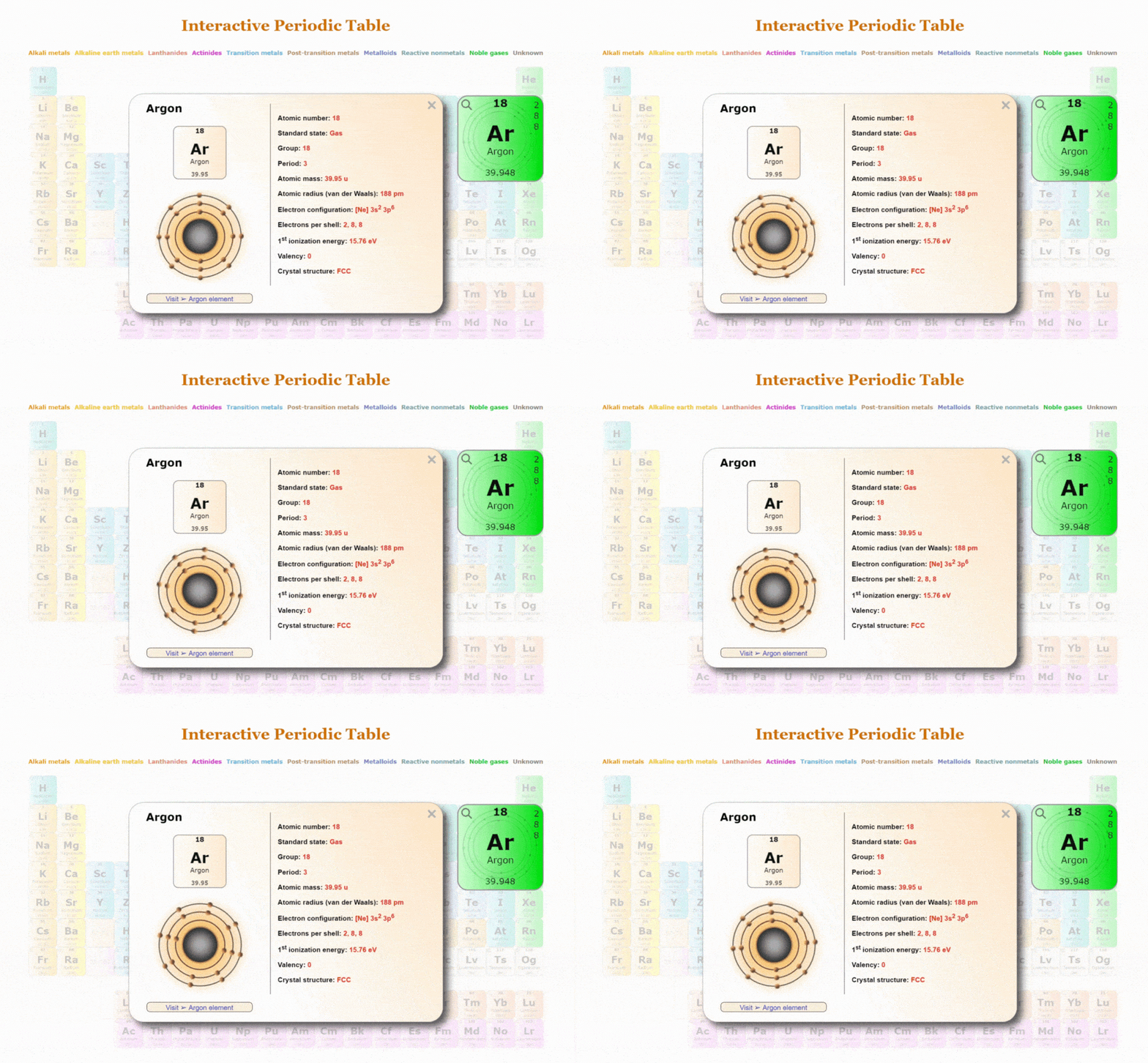
The Significance of the Periodic Table
The periodic table is a key framework in the field of chemistry, organizing elements based on their atomic structure and properties. Recognised universally in science, it provides crucial insights into the relationships between different elements, facilitating advancements in various scientific fields, including biology, physics, and environmental science. As we continue to explore the complexities of matter, understanding the periodic table becomes increasingly vital for students, researchers, and industry professionals.
Structure and Organisation
The periodic table consists of rows known as periods and columns known as groups. Elements are arranged by increasing atomic number, reflecting the number of protons in an atom’s nucleus. Currently, there are 118 confirmed elements, with 80 of them naturally occurring and the rest synthetically engineered in laboratories. The layout of the table highlights trends, such as the increasing electronegativity and ionisation energies across a period as well as the similarities in properties within each group. For instance, alkali metals found in Group 1 exhibit similar reactivity patterns, making them easier to study and predict their behaviour in chemical reactions.
Recent Developments
As of 2023, research into new materials and compounds continues to evolve, with scientists applying the principles of the periodic table in innovative ways. For example, the recent discovery of new compounds in the lanthanide series has potential applications in advanced magnetic materials. Furthermore, elements like graphene, which involve carbon but exhibit unique properties, have stimulated interdisciplinary research efforts that draw on the insights provided by the periodic table.
Conclusion
The periodic table is more than a mere reference; it is a foundational element of scientific literacy that unlocks the door to further understanding the physical world. As we advance scientifically, the periodic table will continue to be a crucial tool for education, research, and industry innovation. Its relevance will only grow as we confront new challenges, harness new technologies, and explore the universe’s complexities. For students and scientists alike, mastering the periodic table is an essential step toward a deeper comprehension of chemistry and the natural world.