Introduction
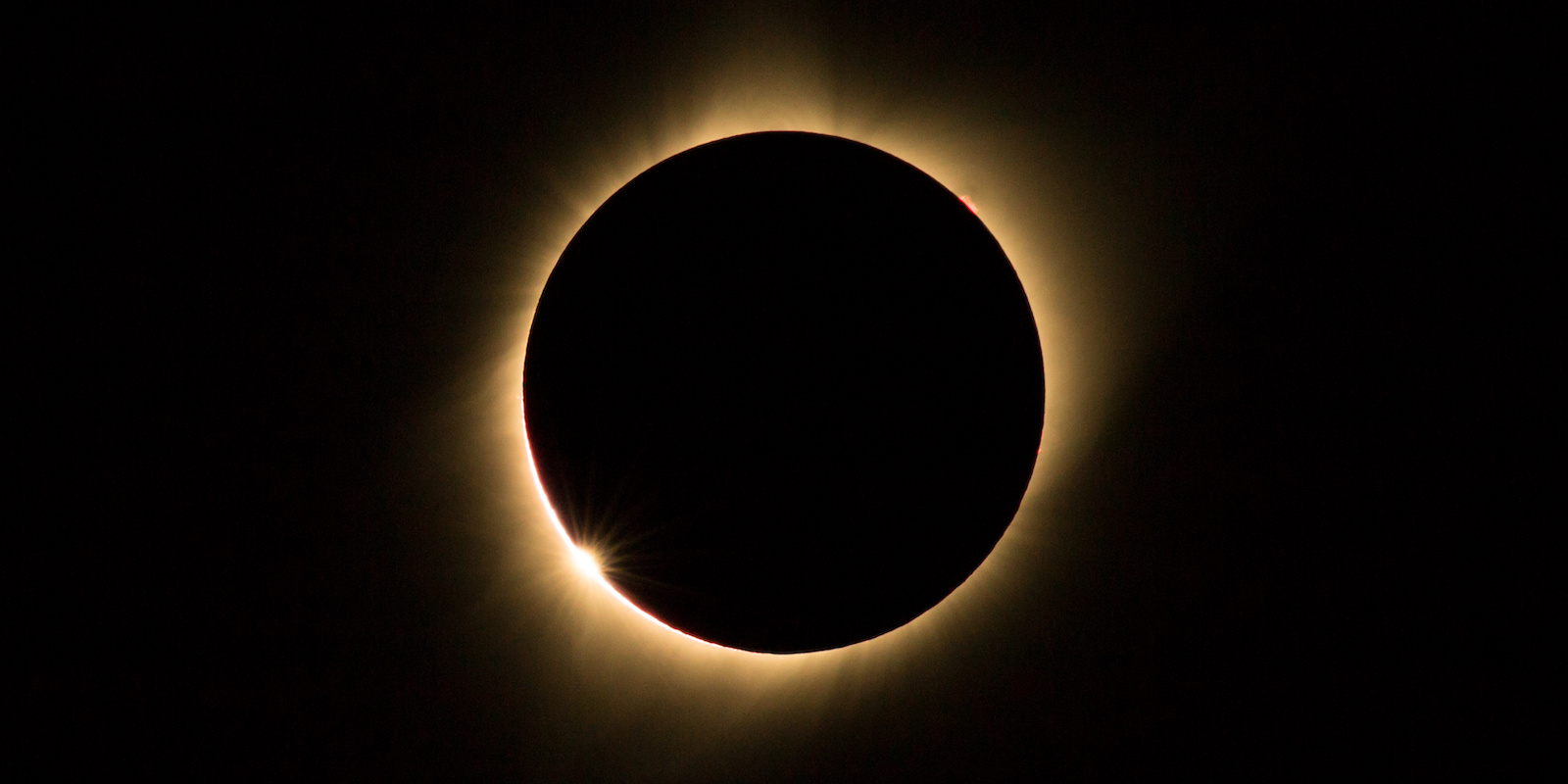
Solar eclipses are one of nature’s most awe-inspiring phenomena, captivating sky gazers and scientists alike. This astronomical event occurs when the Moon passes between the Earth and the Sun, blocking all or part of the Sun’s light. Solar eclipses not only ignite public interest but also provide vital opportunities for scientific research, making them a significant topic in both cultural and scientific contexts.
Types of Solar Eclipses
There are three primary types of solar eclipses: total, partial, and annular. A total solar eclipse happens when the Moon completely covers the Sun, resulting in a short period of complete darkness during the day. This phenomenon allows observers in the path of totality to see the Sun’s corona, its outer atmosphere, which is normally invisible. In contrast, a partial eclipse occurs when only a part of the Sun is obscured by the Moon, leading to a dusky yet still lit sky. Lastly, an annular eclipse occurs when the Moon is too far from Earth to completely cover the Sun, creating a stunning ring-like appearance of the Sun around the Moon.
Recent Solar Eclipses
The solar eclipses that have occurred in recent years have drawn significant attention. On April 30, 2022, a partial solar eclipse was witnessed in parts of South America, with millions observing as the Moon obscured a portion of the Sun. Following this, the total solar eclipse on December 4, 2021, was visible mainly from Antarctica, becoming a subject of study for several scientists. Such events not only excite the public but also contribute to ongoing research in solar physics, helping scientists understand solar activity and its impact on Earth’s climate.
Future Solar Eclipses
Looking ahead, the next total solar eclipse will occur on April 20, 2023, crossing locations in Indonesia and Australia. This event is set to attract viewers from around the globe. Additionally, the United States will experience a significant solar eclipse on April 8, 2024, allowing millions to witness totality across a wide path from Texas to Maine. These upcoming eclipses are expected to further promote interest in astronomy and science education, encouraging more people to look to the skies.
Conclusion
Solar eclipses serve as a reminder of the stunning and complex workings of our solar system. They offer unique opportunities for scientific exploration, cultural reflection, and public engagement. As we anticipate future eclipses, their significance in both educational and recreational contexts cannot be overstated. Whether as a spectacle or a scientific inquiry, solar eclipses will continue to enchant and inspire generations to come.