Introduction to Annular Solar Eclipses
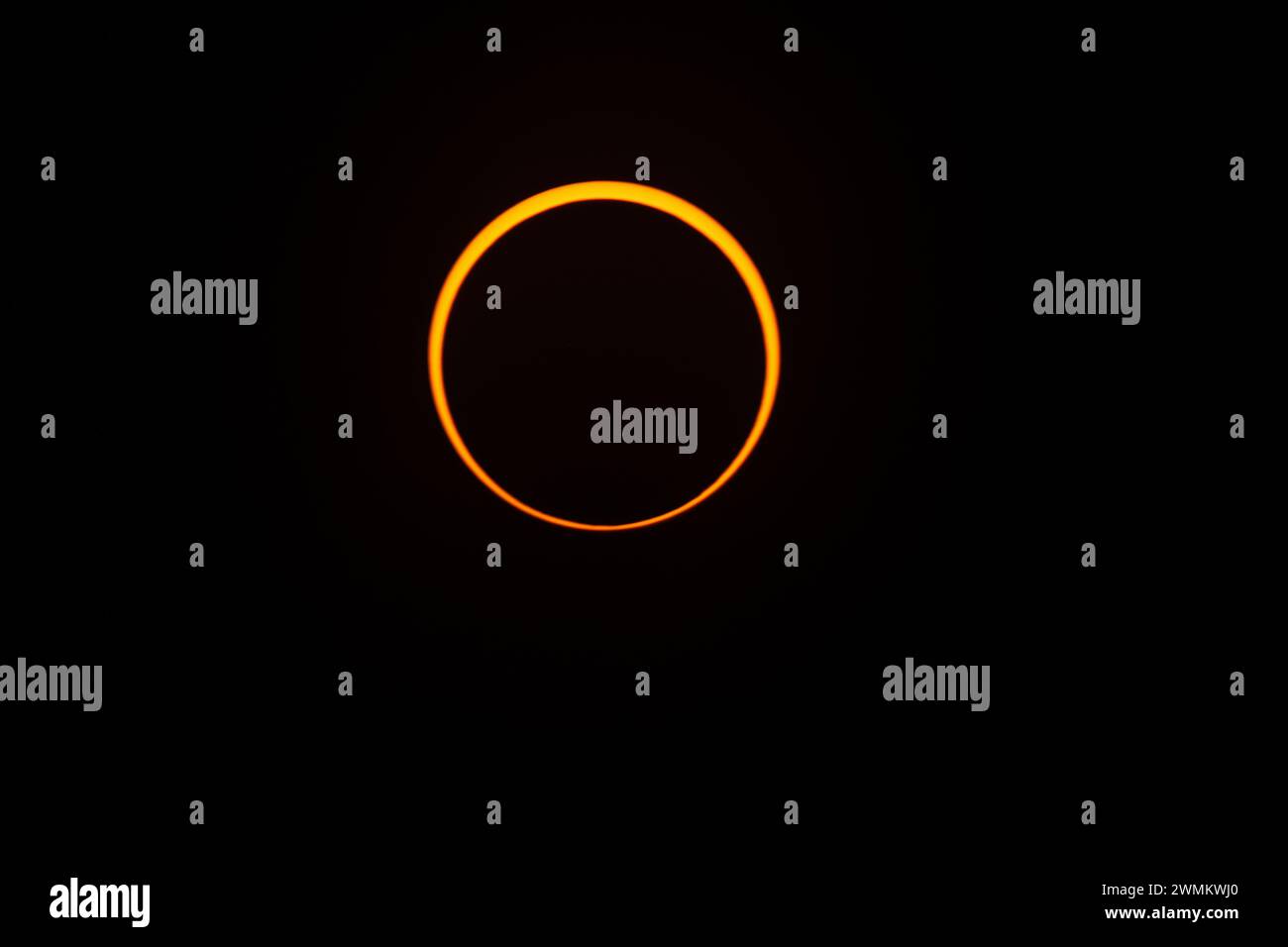
Annular solar eclipses are remarkable celestial events that occur when the Moon covers the Sun’s centre, leaving a ring-like appearance of the Sun’s outer edges. These phenomena are not only visually striking but also scientifically significant, offering insights into our celestial mechanics. As we approach the next annular solar eclipse on October 14, 2023, excitement is building among astronomers and the general public alike.
Upcoming Annular Solar Eclipse
The upcoming annular solar eclipse will be visible across parts of the United States, Central America, and South America. Starting in the Pacific Ocean, the path of annularity will cross through places such as Oregon, California, Nevada, Utah, Arizona, Colorado, New Mexico, Texas, and eventually moving through parts of Brazil. Observers within this path will experience the ‘ring of fire’, a breathtaking sight where the Moon blocks most of the Sun.
Experts recommend using proper solar viewing glasses to safely observe the eclipse, as looking directly at the Sun can cause serious eye damage. For those outside the path of annularity, a partial solar eclipse will be visible across a wider area, allowing millions to partake in this unique experience.
Scientific Significance
Solar eclipses, particularly annular eclipses, serve as valuable opportunities for scientific research. They allow scientists to study the Sun’s corona, the outer layer of the Sun’s atmosphere, which is visible only during an eclipse. Moreover, these occurrences can provide insights into the gravitational effects of celestial bodies and enhance our understanding of orbital mechanics.
Public Engagement and Education
In preparation for the eclipse, many institutions, including planetariums and observatories, are organising public viewing events and educational sessions. These initiatives aim to engage the public and encourage a deeper appreciation of astronomy. Educational materials are being prepared in schools to explain the mechanics behind eclipses and the importance of safe viewing practices.
Conclusion
The annular solar eclipse on October 14, 2023, presents a unique opportunity for both awe and education. With the potential to witness such a spectacular event, it is crucial for observers to be well-prepared and informed. As this celestial event approaches, forecasts suggest a surge in interest in astronomy, underscoring the ongoing importance of engaging with the wonders of our universe. For many, experiencing such a phenomenon can ignite a lifelong passion for science and exploration.