Introduction
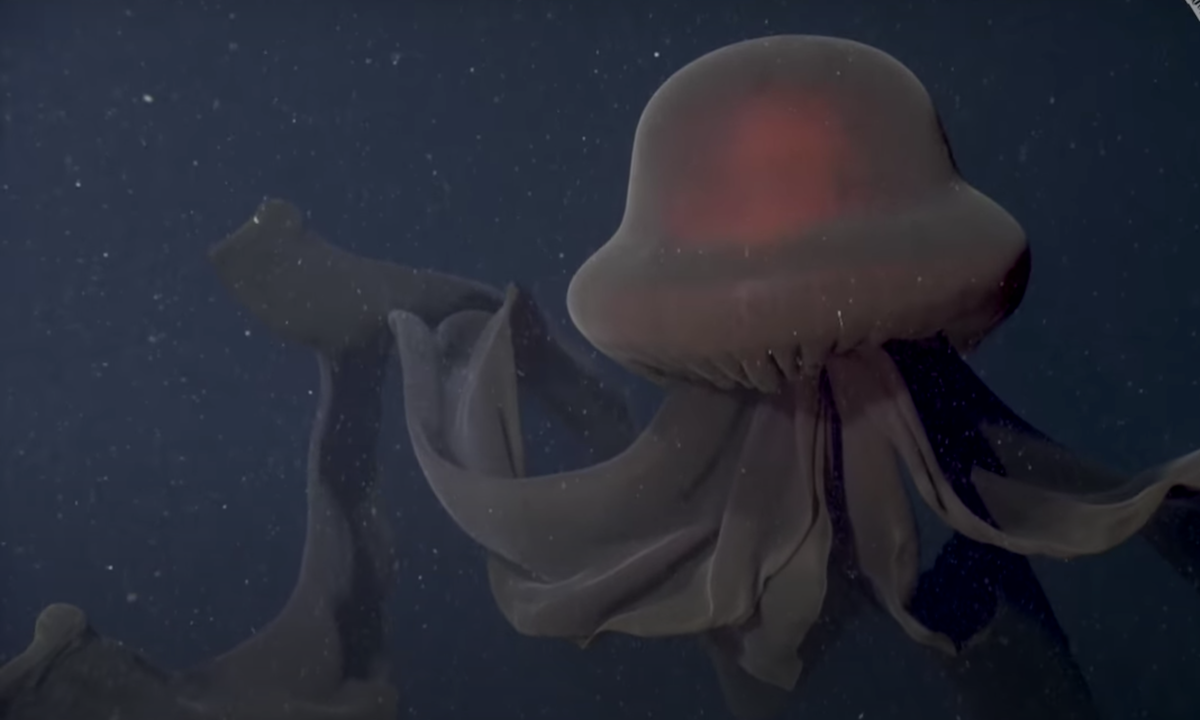
The giant phantom jellyfish, scientifically known as Stygiomedusa gigantea, is an awe-inspiring marine creature that has recently captured the attention of researchers and ocean enthusiasts alike. With its translucent, ethereal body and long, trailing tentacles, this jellyfish not only demonstrates the mysteries of deep-sea life but also plays a vital role in our ocean’s ecosystem. Understanding its behaviours and habitat becomes crucial as climate change impacts marine environments.
Recent Sightings and Research
In August 2023, researchers aboard the ROV (Remotely Operated Vehicle) exploration vessel, Okeanos Explorer, made headlines by capturing astonishing footage of the giant phantom jellyfish in the deep waters off the coast of Bermuda. This jellyfish, which can grow up to 40 inches in bell diameter, was observed pulsating gracefully in the dark depths, showcasing its long, trailing arms reaching several metres behind it.
This sighting is significant, as confirmed encounters of the giant phantom jellyfish are relatively rare. Scientists estimate that the species inhabits deep sea areas, often beyond the reach of human exploration. The fascination surrounding the jellyfish is not only due to its size but also its elusive nature, making understanding its life cycle and behaviour a challenge for marine biologists.
Ecological Importance
The giant phantom jellyfish plays an integral role in the marine food web. As a gelatinous zooplankton, it serves as both predator and prey within its ecosystem. Its diet mainly consists of smaller planktonic organisms, while larger marine animals, including some species of fish and sea turtles, feed on the adult jellyfish. This dynamic helps maintain the balance of the ocean’s biodiversity.
Conclusion
As we continue to explore the depths of our oceans, the giant phantom jellyfish serves as a reminder of the rich, unexplored biodiversity that thrives beneath the surface. The recent research and sightings signal a growing interest in studying this mysterious creature and its contributions to marine ecosystems. For ocean enthusiasts and scholars alike, understanding the giant phantom jellyfish is not just about appreciating its beauty, but also about recognising our responsibility to protect these fragile ecosystems from environmental threats posed by climate change and ocean pollution. Continued exploration and research efforts are essential to ensure that future generations can appreciate the wonders of the deep sea.