Prior Expectations for TCS
Before the recent downturn, Tata Consultancy Services (TCS) was regarded as a stalwart in the technology sector, maintaining a robust market presence with a market capitalisation of Rs.8,91,913 crores. Investors had high expectations, buoyed by the company’s strong fundamentals, including an average Return on Equity (ROE) of 43.49% and a zero debt-to-equity ratio, which indicated financial stability. The stock was seen as a reliable investment, with a dividend yield of 4.42% and a Price to Book Value ratio of 8.4, making it attractive to both institutional and retail investors.
The Decisive Moment
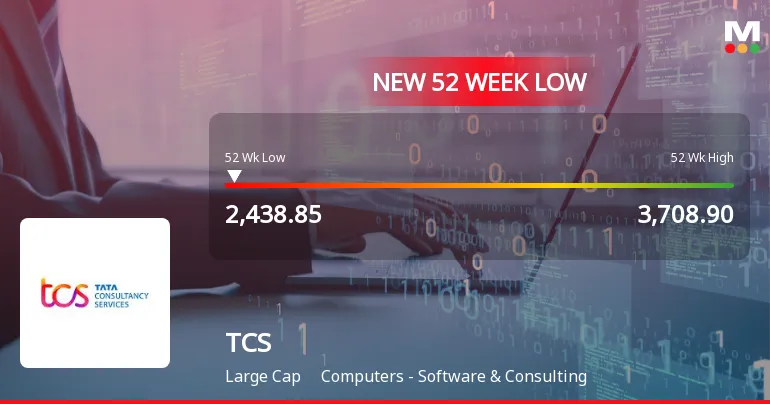
However, this optimistic outlook shifted dramatically on March 12, 2026, when TCS’s share price plummeted to Rs.2440, marking its lowest level in the past year. This decline was part of a broader trend, as the stock lost 7.79% in value over a continuous nine-day period. The Sensex, a key index reflecting the overall market performance, also felt the pressure, closing down by 269.05 points at 76,100.60, a decline of 0.99%. This simultaneous drop in TCS and the Sensex highlighted a bearish trend that raised alarms among investors.
Direct Effects on Investors and Market Sentiment
The immediate effects of this decline were palpable. Investors, particularly institutional ones who hold 23.25% of TCS’s shares, faced significant losses as the stock’s value eroded. The continuous decline has led to a reevaluation of TCS’s market position, with many investors questioning the sustainability of its previous performance. The decline in quarterly earnings per share (EPS) to Rs.29.44 further compounded these concerns, as it indicated potential challenges in revenue generation and profitability.
Expert Perspectives on the Shift
Market analysts have weighed in on the situation, suggesting that the decline in TCS’s stock price could be indicative of broader market trends rather than isolated issues within the company. The bearish trend, characterized by TCS trading below all key moving averages, suggests a lack of investor confidence. Experts note that while TCS has historically been a strong performer, the recent performance raises questions about its future trajectory in a volatile market environment.
Broader Market Context
The decline of TCS is not occurring in a vacuum. The overall market sentiment has been affected by various external factors, including economic uncertainties and changing investor preferences. As the Sensex reflects a broader market trend, the challenges faced by TCS may also be symptomatic of larger economic shifts. Investors are advised to consider these factors when assessing their positions in TCS and similar stocks.
As TCS navigates this challenging period, it remains to be seen how the company will adapt to the changing market dynamics. While the fundamentals of TCS, such as its zero debt-to-equity ratio and strong ROE, remain intact, the recent stock performance underscores the importance of vigilance in investment decisions. The market’s reaction to TCS’s current situation will likely influence its recovery trajectory in the coming months.