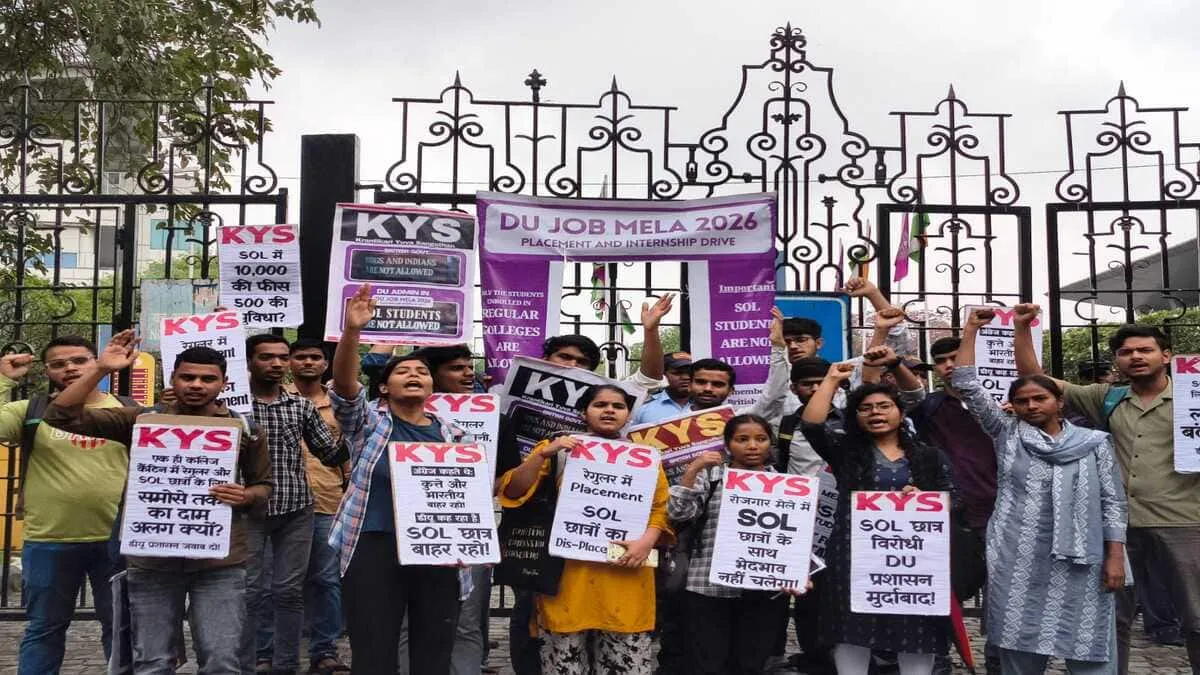
The exclusion of students from the School of Open Learning (SOL) during a recent job fair at Delhi University has led to significant unrest and protests among the student body. This incident highlights the ongoing challenges faced by SOL students in accessing equal opportunities within the university framework.
On March 20, 2026, Delhi University organized a Job Mela aimed at connecting regular undergraduate, postgraduate, and PhD students, as well as alumni, with potential employers. Over 93 recruiters participated in the event, offering more than 2,500 vacancies. However, the initial decision to exclude SOL students from this job fair was met with immediate backlash.
Student organizations, including the Krantikari Yuva Sangathan (KYS) and the Akhil Bharatiya Vidyarthi Parishad (ABVP), voiced their outrage, labeling the exclusion as blatant discrimination. They argued that denying SOL students the chance to participate in the job fair was not only unjust but also detrimental to their future prospects.
In response to the protests, the Dean of Students’ Welfare assured that SOL students would be allowed to participate in the job fair after discussions with student representatives. This assurance came after a series of demonstrations that highlighted the need for inclusivity within university events.
KYS stated, “The DU SOL principal and dean, students’ welfare met with SOL students, and the DU administration was forced to allow SOL students to participate in the programme.” This statement underscores the power of student activism in effecting change within institutional policies.
ABVP further emphasized the discriminatory nature of the exclusion, asserting, “Denying SOL students participation in the job fair is discriminatory and against students’ interests.” Such sentiments reflect a broader concern regarding the treatment of SOL students in university-led initiatives.
This incident is not an isolated case; it marks a continuation of a troubling trend where SOL students have previously been barred from participating in various university events. The historical context of these exclusions raises questions about the university’s commitment to equity and inclusion.
In light of the recent developments, the university has committed to preventing similar exclusions in the future. KYS noted, “It has been conceded that in the future, SOL students will not be barred from any such programme.” This pledge is a positive step towards ensuring that all students have equal access to opportunities.
As the situation unfolds, students and advocates will be watching closely to see if the university follows through on its commitments. Details remain unconfirmed regarding the specific measures that will be implemented to ensure inclusivity in future events.