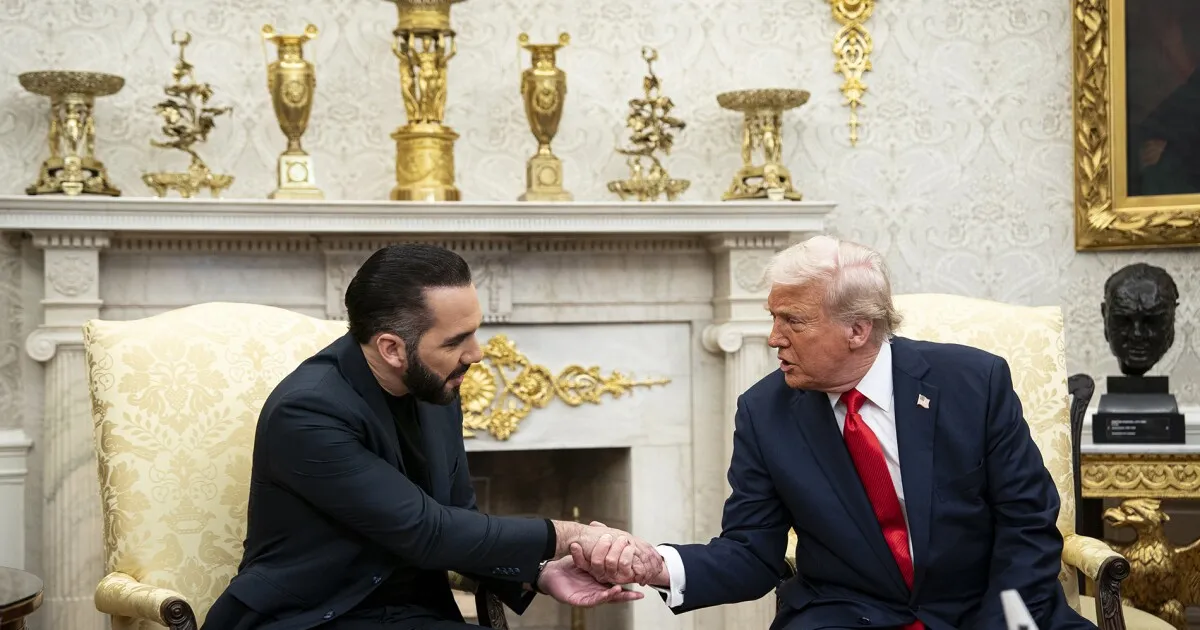
As the sun rose on April 7, 2026, El Salvador stood on the brink of a significant moment in its ongoing battle against gang violence. President Nayib Bukele, whose controversial policies have garnered both support and criticism, was about to witness the premiere of the documentary ‘The Deal: Trump, Bukele & the Gangs of El Salvador’. This film promises to shed light on the complex relationship between Bukele and former President Donald Trump, particularly focusing on a deal that involved imprisoning deportees accused of gang affiliations.
In the months leading up to this premiere, the Salvadoran government has escalated its anti-gang measures, resulting in approximately 91,000 people being detained under a state of exception. This state, now in its fourth year, has seen mass trials initiated against around 20,000 detainees, many of whom are being grouped together in large numbers, raising concerns about the fairness of the legal process.
Among those caught in this web is Williams Díaz, who was detained while commuting to work and now awaits trial in a mega-prison designed for gang members. Similarly, Jonathan, a 24-year-old maquila worker, finds himself unjustly categorized within a Mara Salvatrucha clique alongside 80 others. As the trials progress, the lack of due process guarantees has become a focal point of concern, with many fearing wrongful convictions.
Gladis Villatoro, a family member of one of the detainees, expressed the grim reality of the situation: “Some will pay for others. If they convict one, they convict the whole group.” This sentiment echoes throughout the communities affected by the government’s sweeping actions, where fear and uncertainty loom large.
The attorney general’s office has promised 3,000 indictments in the first quarter of the year, indicating a relentless push to prosecute alleged gang members. However, the reforms to the organized crime law have eliminated crucial hearings where evidence is evaluated, further complicating the landscape of justice in El Salvador.
Human Rights Watch has documented numerous detentions stemming from anonymous calls and neighborhood disputes, highlighting the arbitrary nature of many arrests. As Reynaldo Santos, another family member of a detainee, described the situation, “It is Russian roulette, anguish, an ordeal.” The emotional toll on families is profound, with many left to grapple with the uncertainty of their loved ones’ fates.
As the documentary premieres, it serves as a reminder of the complexities surrounding Bukele’s administration. While he remains popular for his aggressive stance against gang terror, reports of wrongful arrests continue to surface, casting a shadow over his achievements.
With the current state of affairs, the future of many detainees hangs in the balance. As Villatoro poignantly stated, “They will never get out.” The ongoing mass trials and the government’s control over all branches of the state raise critical questions about justice and human rights in El Salvador.
Details remain unconfirmed regarding the exact number of wrongful arrests and the specifics of the deal between Trump and Bukele, but the implications of these events are clear. The people of El Salvador are caught in a struggle that intertwines their safety with the preservation of their rights.