Introduction
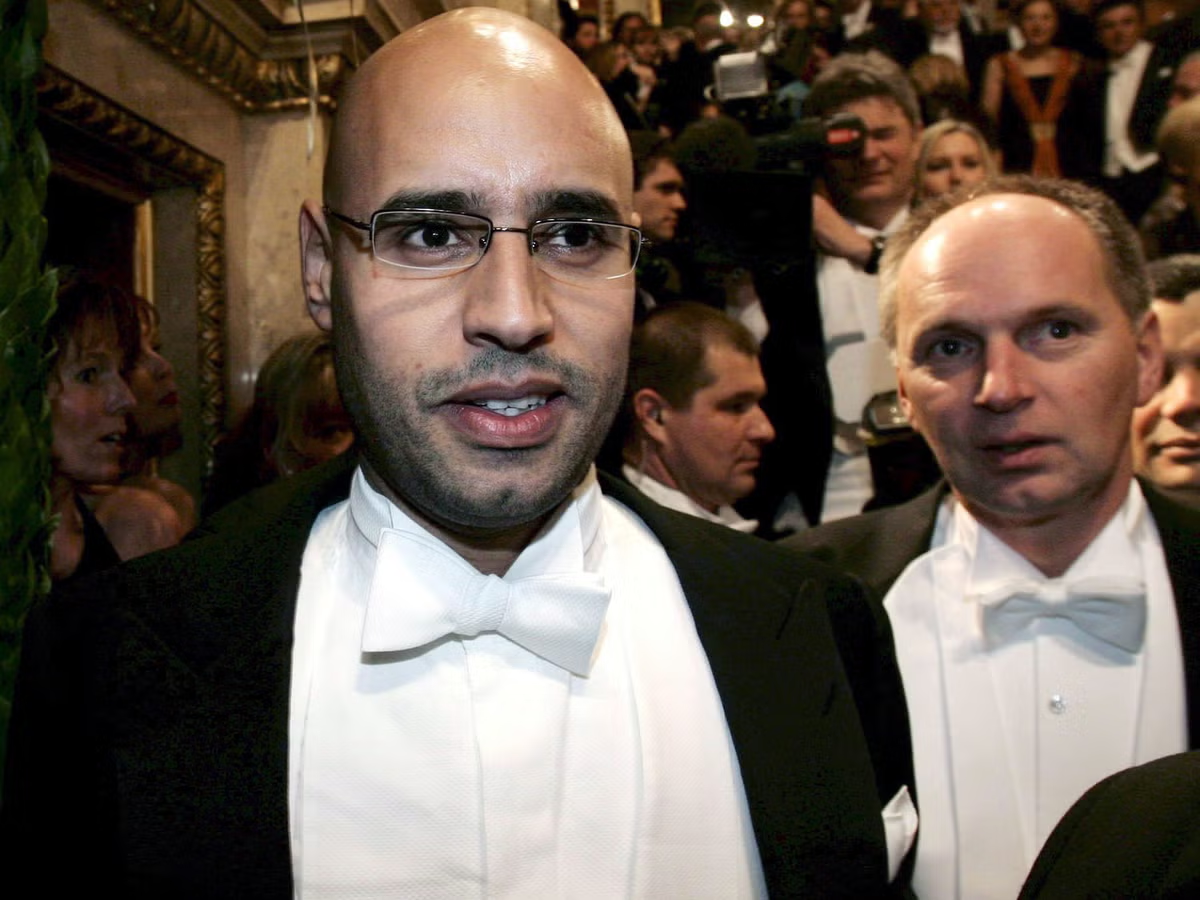
Saif al Islam Gaddafi, the son of former Libyan leader Muammar Gaddafi, remains a significant figure in Libya’s turbulent political landscape. Since the downfall of his father’s regime in 2011, Saif has been at the centre of controversies and political aspirations in the country. His journey embodies the complexities of post-revolution Libyan politics, and his potential return to power has sparked intense debate among Libyans and international observers alike.
Current Status and Recent Developments
Recently, Saif al Islam has made headlines following his registration to run in the upcoming presidential elections scheduled for December 2023. His bid for power has recruited both supporters and detractors, highlighting the polarisation within Libyan society. Despite being sentenced to death in absentia in 2015 for crimes against humanity by a Tripoli court, his supporters argue that he represents stability and continuity in a nation beset by conflict and division.
Reintegration into Politics
Saif’s ambitions align with a broader effort to reconcile and rebuild Libya. Despite facing numerous challenges, including the disintegration of political structures and armed factions vying for control, he has leveraged his family’s legacy to appeal to a segment of the population that yearns for a return to order. His proposals often centre around economic revival and national unity, which resonate with many Libyans who have suffered from years of war and economic instability.
Controversies and Public Opinion
However, his candidacy is not without significant challenges. The international community remains sceptical, and many Libyans associate him with the oppressive tactics of his father’s regime. A recent survey indicates a divided public opinion, wherein approximately 40% view Saif as a potential stabilising force, while 38% oppose his return due to his past associations. This stark divide highlights the lingering scars of the Gaddafi era, as many citizens grapple with forgiving the past while hoping for a brighter future.
Conclusion
As Libya approaches a crucial juncture in its political history, Saif al Islam Gaddafi’s role remains pivotal. His current aspirations reflect a desire for power amid an ongoing struggle for national identity and governance. Observers predict that his candidacy will stimulate critical discussions about the direction of Libyan politics and the difficult path toward reconciliation. For many, Saif represents a bridge between the past and a potentially stabilised future, while for others, his campaign is a reminder of the darker chapters in Libya’s history. As the elections draw nearer, the significance of Saif al Islam Gaddafi in Libyan politics will undoubtedly continue to unfold.