The wider picture
The Gen Z protests, which erupted in September 2025, were fueled by widespread discontent over economic hardship and governance issues in Nepal. These protests, which tragically resulted in 76 deaths, marked a significant moment in the country’s political landscape, as young citizens demanded accountability and reform. The protests were particularly intense on September 8, when police firing led to at least 19 fatalities, further escalating tensions between the government and the populace.
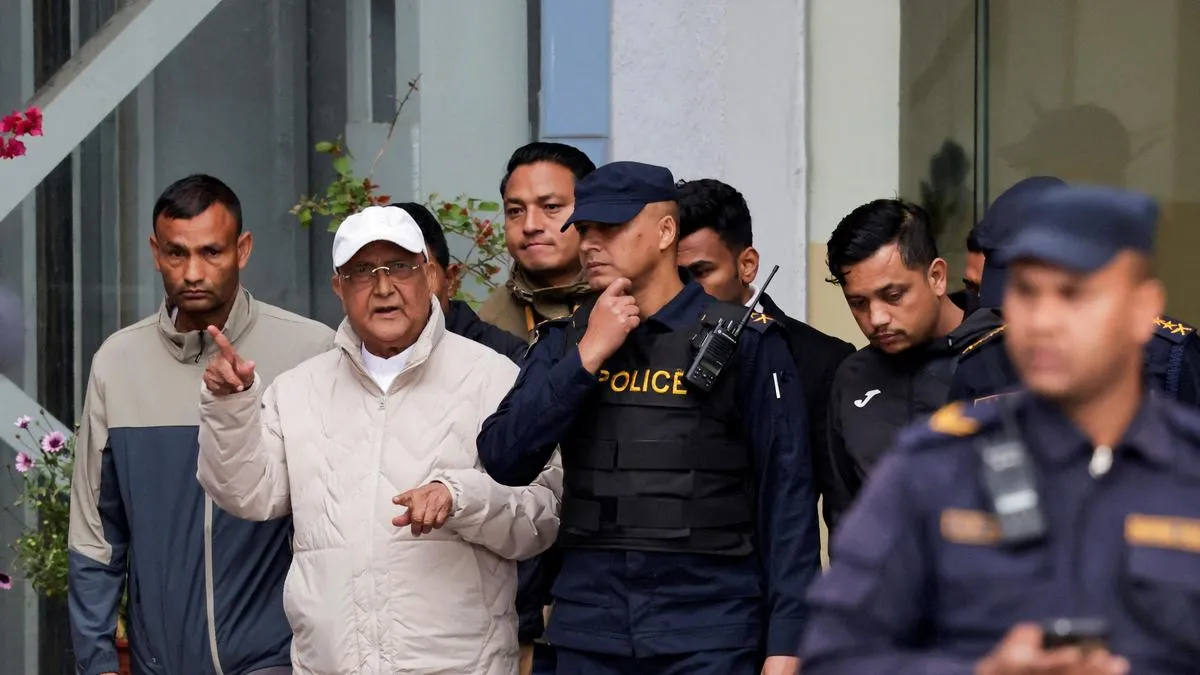
In a dramatic turn of events, K.P. Sharma Oli, the former Prime Minister and leader of the Communist Party of Nepal (Unified Marxist–Leninist), was arrested on March 28, 2026, at his residence in Gundu, Bhaktapur. This arrest came just a day after a new government led by Balendra Shah was sworn in, signaling a potential shift in the political dynamics of the nation. The arrest was based on charges of culpable homicide linked to the violent protests, as a probe commission had recommended prosecution for negligent killings.
Oli, now 74 years old, was taken into custody alongside Ramesh Lekhak, a former minister, who was arrested in Suryabinayak, Bhaktapur. The commission’s report, submitted to the outgoing government on March 8, 2026, highlighted the need for accountability in the wake of the protests, which had shaken the very foundations of governance in Nepal.
Sudhan Gurung, the new Home Minister, expressed that the arrests were a step towards justice, stating, “A promise is a promise: No one is above the law.” His remarks reflect a commitment to uphold the rule of law in a country where many feel that justice has often been elusive. Gurung emphasized that this was not an act of revenge but rather the beginning of a long-awaited reckoning for those in power.
However, the response from Oli’s party has been one of defiance. Yogesh Bhattarai, a prominent figure within the Communist Party, declared that the arrests were unconstitutional and illegal, vowing to protest in the strongest form possible. This sentiment echoes a broader concern among Oli’s supporters, who fear that the political landscape is becoming increasingly polarized.
As the dust settles from these significant developments, observers are keenly watching how the new government will navigate the challenges ahead. A decision regarding the custody of Oli and Lekhak is expected to be made once the courts reopen on Sunday, raising questions about the future of both men and the implications for Nepal’s political stability.
In the wake of these events, many are left pondering the path forward for Nepal. The youth, who were at the forefront of the protests, demanded clean governance and accountability, but as activist Hari Sharma noted, “this must be achieved through the rule of law, not rule by law.” The unfolding situation presents a critical juncture for Nepal, as the nation grapples with its past while striving for a more just and equitable future.