What Does Kartik Kannan’s Post Reveal About Ahmedabad’s Nightlife?
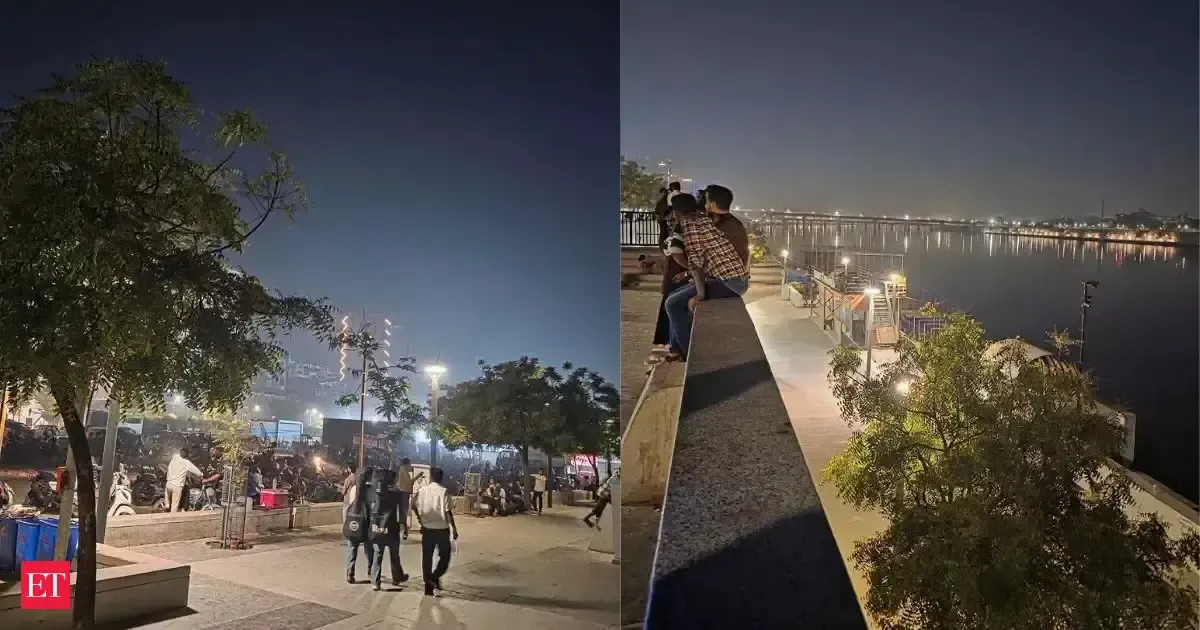
Kartik Kannan’s recent post comparing the nightlife of Ahmedabad and Bengaluru raises an intriguing question: How do these two Indian cities differ in terms of their late-night atmospheres? Kannan’s observations suggest that Ahmedabad offers a more vibrant and safer nightlife experience, a claim that has resonated with many netizens.
In his viral post, Kannan praised Ahmedabad for its lively atmosphere at 1 AM, stating, “Ahmedabad is buzzing for 1 AM with a very festive feel.” He expressed a desire for Bengaluru to have similar spaces where people can enjoy the night without the fear of police interference, saying, “I wish we had a place in Bangalore where we could walk out at midnight around a central place without police breathing down your neck.” This sentiment has sparked a broader debate about nightlife and safety in Indian cities.
The post has garnered significant attention, receiving nearly 3.9 thousand likes and being viewed by over 336.7 thousand users. Many individuals shared their experiences of Ahmedabad’s nightlife, highlighting its safety and festive atmosphere. One user noted, “I have been to Ahmedabad so many times, found it to be a very safe and chilled out place,” reinforcing Kannan’s observations.
Supporters of Ahmedabad’s nightlife pointed out the availability of food and social spaces, with comments emphasizing that the city is awake throughout the night. One user remarked, “Ahmedabad is superb. The city is awake the entire night and so many good places to eat even at midnight.” This strong vegetarian food culture in Ahmedabad adds to its appeal as a nightlife destination.
However, not all responses favored Ahmedabad over Bengaluru. Some users defended Bengaluru, suggesting that it still has lively areas worth exploring. The discussion included comparisons of nightlife in both cities, with users sharing their opinions on the availability of food and social spaces. This exchange of views highlights the diverse perspectives on what constitutes a vibrant nightlife.
Kannan’s post has not only sparked a conversation about nightlife but has also raised questions about the safety and social dynamics in urban India. As more people engage in this dialogue, it remains to be seen how these discussions will influence perceptions of nightlife in both cities.
As the debate continues, details remain unconfirmed regarding any potential changes to nightlife policies in Bengaluru or how the city might respond to Kannan’s call for more vibrant late-night spaces. The conversation surrounding nightlife safety and vibrancy in Indian cities is far from over, and it will be interesting to see how it evolves in the coming weeks.