As the sun began to rise on April 5, 2026, the Strait of Hormuz, a vital waterway for global oil shipments, became the epicenter of a dramatic standoff. Tensions had been simmering for months, but the situation reached a critical juncture when U.S. President Donald Trump issued an ultimatum to Iran: reopen the Strait by a self-imposed Tuesday deadline or face military strikes. This demand, laden with threats, set the stage for an escalation that would reverberate across the region.
In the days leading up to the deadline, the atmosphere was charged with anxiety and uncertainty. Iran’s leadership responded defiantly, with officials declaring they had “lost the keys” to the Strait, a metaphorical assertion of their unwillingness to comply with Trump’s demands. The stakes were high, as the Strait of Hormuz is a crucial artery for oil transport, and any disruption could have catastrophic economic implications not just for Iran, but for the entire world.
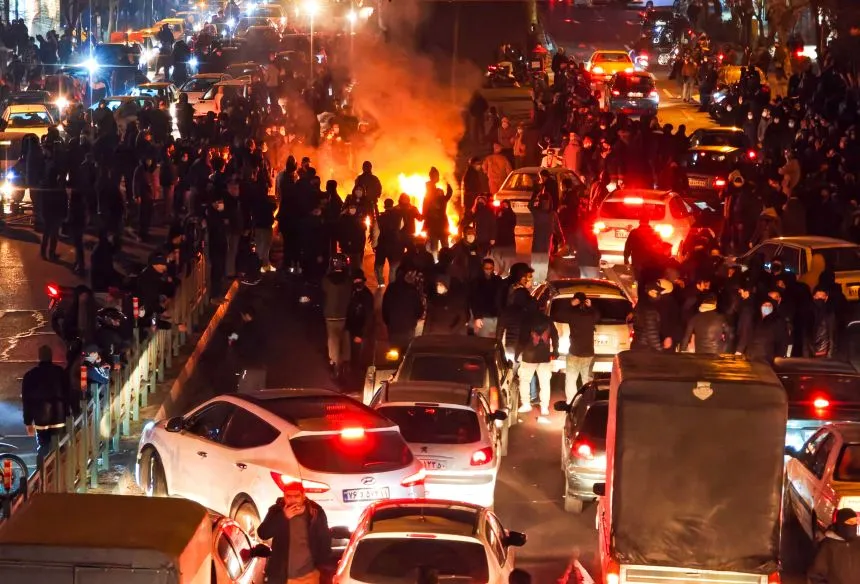
As the deadline approached, the situation deteriorated rapidly. On the same day Trump issued his ultimatum, Iranian military officials warned of increased attacks on regional oil and civilian infrastructure if provoked. The tension escalated further when airstrikes hit Tehran, resulting in explosions in civilian areas, including Qom, where five people lost their lives. The violence was not one-sided; Iran retaliated by downing a U.S. F-15E fighter jet, prompting a complex rescue operation involving multiple aircraft.
In a chilling response to the escalating conflict, Iran threatened to restrict access to the Bab el-Mandeb Strait, another critical maritime route, if attacked by the U.S. or Israel. The Iranian joint military command’s warnings underscored the potential for a broader regional conflict, as they vowed to expand their military response beyond their borders. The implications of such actions could be dire, not just for Iran but for neighboring countries and global markets reliant on oil.
As the violence continued to unfold, the Iranian U.N. mission condemned Trump’s threats, labeling them as “clear evidence of intent to commit war crime.” This statement reflected the deepening rift between the two nations, as diplomatic efforts remained ongoing, with Oman and other regional powers attempting to mediate the crisis. Yet, the prospects for peace seemed dim against the backdrop of escalating military actions.
The human cost of this conflict has been staggering. Reports indicate that more than 1,900 people have been killed in Iran since the war began, a grim statistic that highlights the toll of the ongoing violence. In addition, airstrikes in Iran have claimed the lives of 13 individuals near Eslamshar, while four people were killed in Beirut due to an Israeli strike. The casualties extend beyond Iran, with 1,400 people reported dead in Lebanon and 19 in Israel since the outbreak of hostilities.
As the situation stands now, the Strait of Hormuz remains a flashpoint, with both sides entrenched in their positions. Trump’s threats included targeting Iran’s power plants and bridges, further inflaming tensions. Iranian officials have tied the reopening of the Strait to compensation for war damages, indicating that any resolution may require significant concessions. Meanwhile, the international community watches with bated breath, aware that the consequences of this standoff could ripple far beyond the region.
Details remain unconfirmed, but the potential for further escalation looms large. The crisis has entered a volatile phase where military escalation and diplomatic brinkmanship are unfolding in parallel, leaving many to wonder how this conflict will evolve and what it will mean for the families caught in the crossfire.