As we stand on the brink of a technological revolution, the launch of Gemma 4 AI by Google DeepMind marks a significant milestone in the evolution of artificial intelligence. Just recently, the tech community was buzzing with anticipation as details emerged about this family of state-of-the-art open models designed to enhance user experiences across various devices.
On the day of its unveiling, it was revealed that Gemma 4 supports an impressive 140 languages, making it accessible to a diverse global audience. This inclusivity is crucial as it empowers developers and users alike to harness the power of AI in their native languages, fostering innovation and creativity.
What sets Gemma 4 apart is its remarkable capability to perform multi-step planning and autonomous actions. This means that users can expect more than just basic interactions; they can engage with AI that understands context and can execute complex tasks seamlessly.
Moreover, Gemma 4 boasts a 128K context window, allowing it to process long-form content efficiently. This feature is particularly beneficial for developers looking to create applications that require deep understanding and analysis of extensive data.
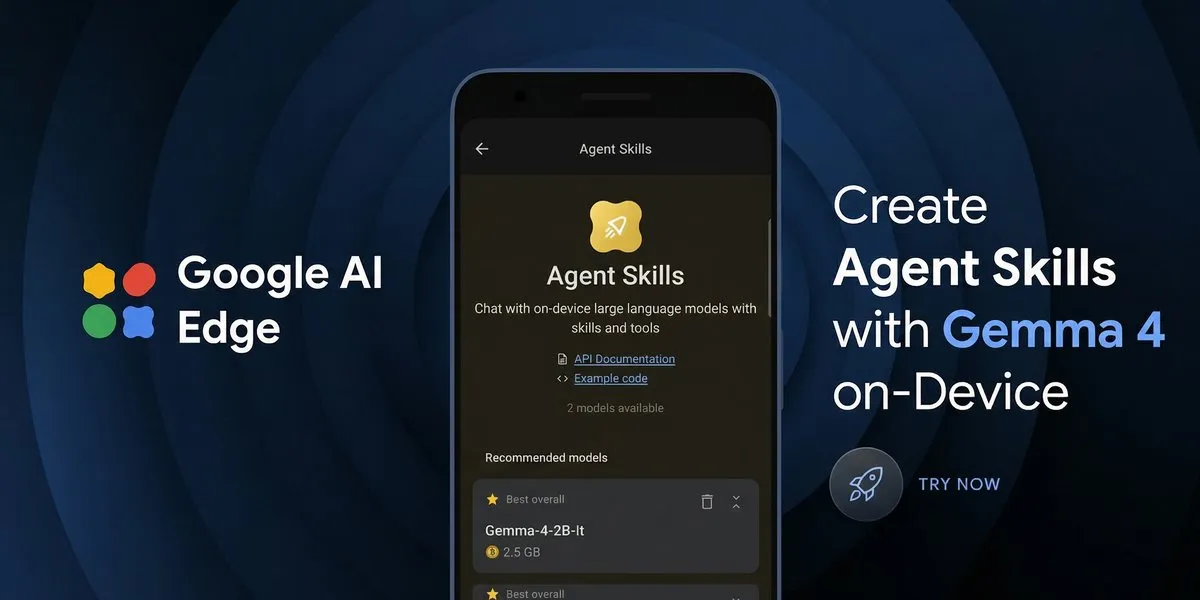
As the world shifts towards more mobile and decentralized computing, Gemma 4 is optimized to run on a variety of devices, from mobile phones to IoT systems and robotics. This flexibility ensures that cutting-edge AI technology is not confined to high-end hardware but is available to a broader audience.
In terms of performance, Gemma 4 can achieve a prefill throughput of 133 tokens per second on a Raspberry Pi 5, showcasing its efficiency even on lower-powered devices. This capability opens up new possibilities for developers who wish to implement AI solutions in resource-constrained environments.
Additionally, the E2B and E4B models of Gemma 4 support native audio input for speech recognition, enhancing user interaction through voice commands. This feature aligns with the growing trend of voice-activated technology, making it easier for users to engage with AI.
With high-quality offline code generation, Gemma 4 transforms workstations into local-first AI code assistants, allowing developers to work without constant internet connectivity. This aspect is vital for those in areas with limited access to reliable internet.
As we witness these advancements, the excitement in the tech community is palpable. “The era of agentic experiences on-device is here, and we hope you are excited to start building on the edge,” a representative from Google DeepMind remarked, highlighting the potential for innovation.
With the introduction of models sized specifically for efficient fine-tuning on various hardware, including the 26B and 31B versions, Gemma 4 is poised to power the next generation of pioneering research and products.
As the landscape of artificial intelligence continues to evolve, the implications of Gemma 4 AI are profound. It not only represents a leap forward in technology but also signifies a shift towards more accessible and efficient AI solutions for everyone.