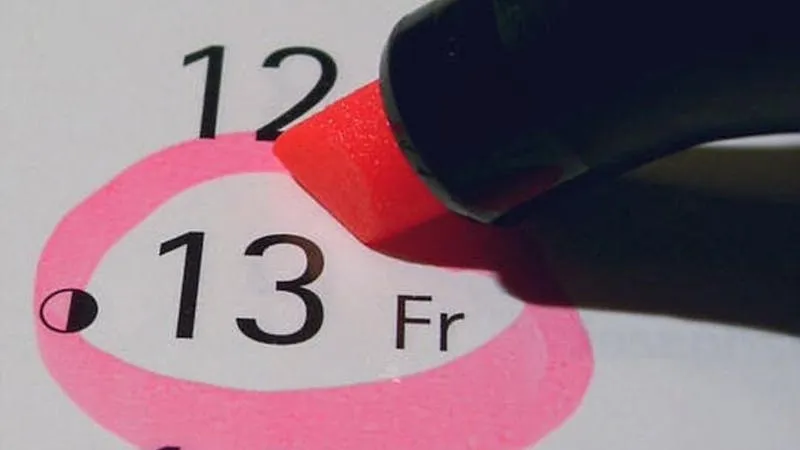
Friday the 13th is considered an unlucky date, a belief that has persisted for decades. The origins of this superstition can be traced back to a novel published in 1907, where a stockbroker orchestrates a market crash on this fateful day. This narrative has contributed to the cultural perception of Friday the 13th as a day of misfortune.
Recent Developments
As March 13, 2026, approaches, it marks the second of three Friday the 13ths in that year. This occurrence has reignited discussions around the date’s significance and its impact on various aspects of life, from personal beliefs to entertainment choices.
Impact on Entertainment
The fascination with Friday the 13th extends beyond superstition; it has become a cultural phenomenon reflected in films, music, and video games. The first ‘Friday the 13th’ film was released in 1980, and since then, the film series has produced 12 installments featuring the iconic character Jason Voorhees. This series has not only entertained audiences but has also solidified the date’s association with horror.
Moreover, the 2017 game ‘Friday the 13th: The Game’ allows players to engage with the narrative by controlling either camp counselors or Jason himself. This interactive element highlights how the date’s legacy continues to evolve in contemporary entertainment.
Expert Perspectives
Experts note that the fear of Friday the 13th, known as paraskevidekatriaphobia, can lead to increased anxiety for some individuals. As one commentator stated, “If the date brings you uneasiness, buckle up.” This sentiment reflects the ongoing cultural significance of the date.
Additionally, the influence of Friday the 13th is evident in various media forms. As another expert remarked, “Friday the 13th isn’t just prominent in films but also in music and video games.” This multifaceted presence underscores the date’s lasting impact on popular culture.
Cultural Legacy
The fact that a single date appears in video games, music, and movies shows how Friday the 13th’s legacy still has an impact on contemporary entertainment. The fascination with the date isn’t going away, whether one chooses to celebrate with horror movie marathons or avoid shattered mirrors. This enduring interest illustrates the complex relationship society has with superstition and entertainment.
As March 2026 approaches, the cultural dialogue surrounding Friday the 13th is likely to intensify, inviting both celebration and caution. Details remain unconfirmed regarding any specific events planned for this date, but the anticipation is palpable as people reflect on its historical and cultural significance.