What does the rising tension at the Bab el-Mandeb Strait mean for global maritime trade? The answer is critical: it poses a significant threat to one of the world’s most strategic waterways, which sees about 10% to 12% of global maritime trade transit through its narrow passage.
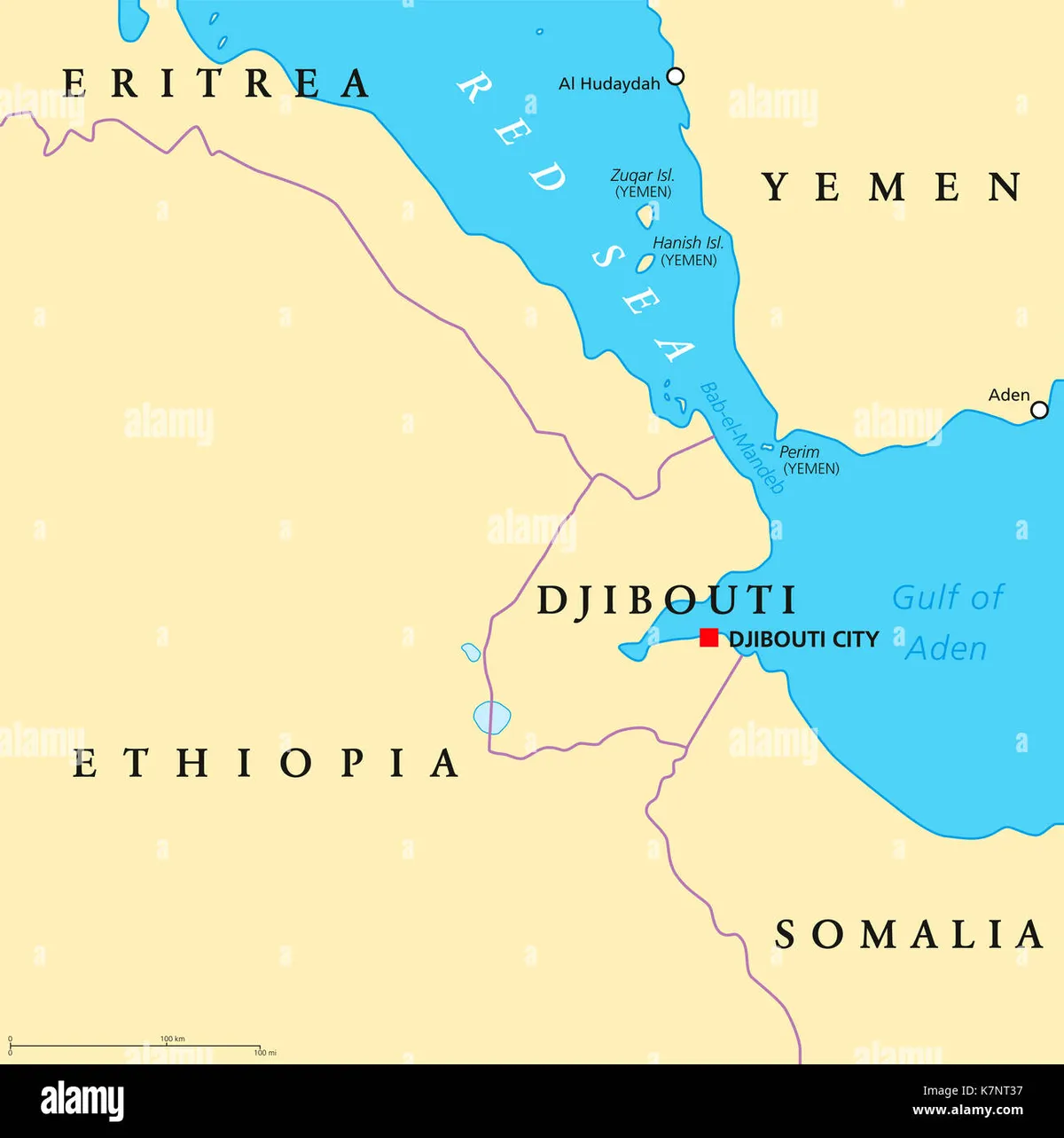
Located between the Horn of Africa and the Arabian Peninsula, the Bab el-Mandeb Strait connects the Red Sea to the Gulf of Aden, serving as a vital gateway to the Suez Canal. At its narrowest point, the strait is just 26 kilometers (16 miles) wide, yet it facilitates the passage of approximately 4 to 9 million barrels of oil daily, with cargo worth around $1 trillion crossing its waters each year.
The current tensions are fueled by threats from Iran, which has indicated a willingness to block the strait amid escalating conflicts. The Iranian Islamic Revolutionary Guard Corps (IRGC) has stated, “The Bab al-Mandab Strait is considered one of the world’s strategic straits, and Iran has both the will and the ability to create a completely credible threat against it.” This statement underscores the potential for significant disruption in a region already fraught with conflict.
Adding to the complexity, the Houthis, a group based in Yemen, have pledged support to Iran in controlling the strait. Their involvement raises concerns about the stability of maritime routes that are crucial for global energy supplies. The Bab el-Mandeb Strait is sometimes referred to as “Hormuz 2.0,” drawing parallels to the Strait of Hormuz, which is already a flashpoint for geopolitical tensions.
The historical significance of the Bab el-Mandeb Strait cannot be understated. Its prominence surged after the opening of the Suez Canal in 1869, which increased maritime traffic through the region. Today, the strait remains a critical juncture for international shipping, with about 90% of Iran’s crude exports being handled through its waters.
As the situation evolves, the implications for global trade and energy security are profound. The strait, often referred to as the “Gate of Tears” in Arabic, may soon see increased military presence and potential conflict, impacting not just regional players but the global economy as well.
Details remain unconfirmed regarding the full extent of military actions or strategic maneuvers that may unfold in the coming weeks. The international community watches closely, aware that any disruption at the Bab el-Mandeb could reverberate throughout the global marketplace.