How it unfolded
As the sun began to set on April 1, 2026, anticipation hung thick in the air at Kennedy Space Center in Florida. Families, friends, and space enthusiasts gathered to witness a moment that would echo through history. For the first time in 50 years, humans were preparing to venture beyond low Earth orbit, a feat not accomplished since the Apollo 17 mission in 1972. The excitement was palpable, and the world watched as NASA prepared to launch Artemis II, the first crewed flight of its ambitious Artemis program.
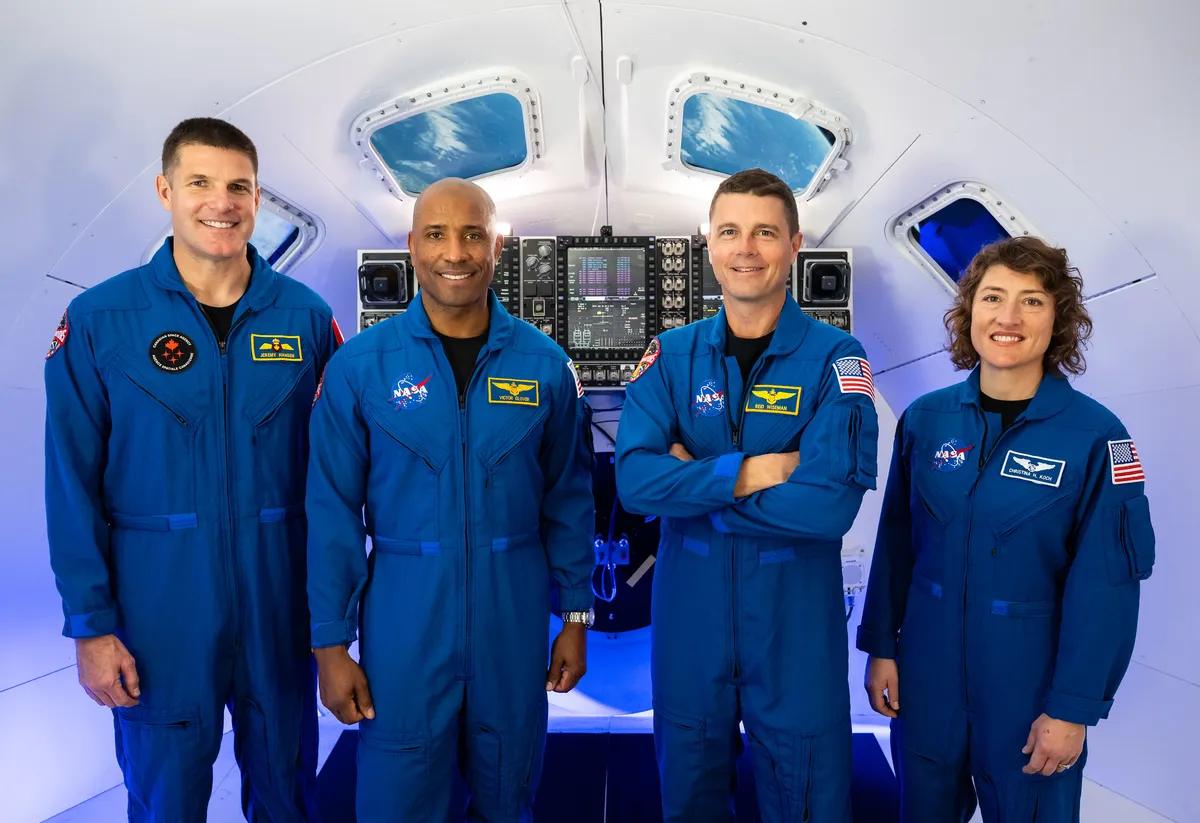
At precisely 6:35 p.m. EDT, the countdown reached zero, and the Orion spacecraft roared to life, lifting off from the launch pad. The mission, which will last approximately 10 days, is not just a journey to the Moon; it is a critical test of the systems and hardware that will enable future deep space travel. The crew, consisting of astronauts Reid Wiseman, Victor Glover, Christina Koch, and Jeremy Hansen, is set to embark on a journey that will take them more than 400,000 kilometers from Earth, flying past the far side of the Moon.
As the spacecraft ascended, NASA Administrator Jared Isaacman spoke to the crowd, declaring, “Today’s launch marks a defining moment for our nation and for all who believe in exploration.” His words resonated with the audience, who understood the significance of this mission. It was not merely about reaching the Moon; it was about reigniting humanity’s spirit of exploration and setting the stage for future endeavors, including missions to Mars.
The Orion spacecraft is equipped with the European Service Module (ESM), which plays a vital role in providing life support and propulsion. This mission will test life support systems for the first time with a crew on board, ensuring that astronauts can thrive in the harsh environment of space. During their lunar flyby, the crew will not only gather data but also capture stunning photographs of the Moon and Earth, reminding us of the beauty of our home planet from afar.
As the mission progresses, the crew will conduct manual piloting demonstrations, showcasing their skills and the capabilities of the Orion spacecraft. They will fly to within 70,000 kilometers of the Moon’s surface, a breathtaking proximity that will allow them to experience the awe of lunar exploration without landing. NASA Associate Administrator Amit Kshatriya emphasized the importance of this test flight, stating, “Artemis II is a test flight, and the test has just begun.” The mission is a critical step toward the next challenges ahead, including the demonstration mission for Artemis III, which will involve in-orbit lander docking tests.
As the world holds its breath, the significance of Artemis II extends beyond the immediate mission. It represents a renewed commitment to human space exploration and the potential for future generations to explore the cosmos. The astronauts aboard Orion are not just representatives of NASA; they embody the hopes and dreams of humanity as we look to the stars.
In the coming days, as the crew navigates the vastness of space, they will face challenges, including the intense heat of re-entry, where temperatures can soar to 2,500 degrees Celsius. Yet, they are prepared, equipped with the knowledge and technology developed over decades of space exploration. Their journey is a testament to human ingenuity and resilience, paving the way for the next chapter in our quest to explore the universe.
As Artemis II continues its mission, the world watches with bated breath, knowing that this is just the beginning of a new era in space exploration. The legacy of Apollo lives on, and with each passing moment, we inch closer to returning humans to the Moon and eventually to Mars. The journey is long, but with Artemis, we are reminded that the spirit of exploration is alive and well, ready to take us to new heights.