Amul’s Cooperative Model Expands in Odisha
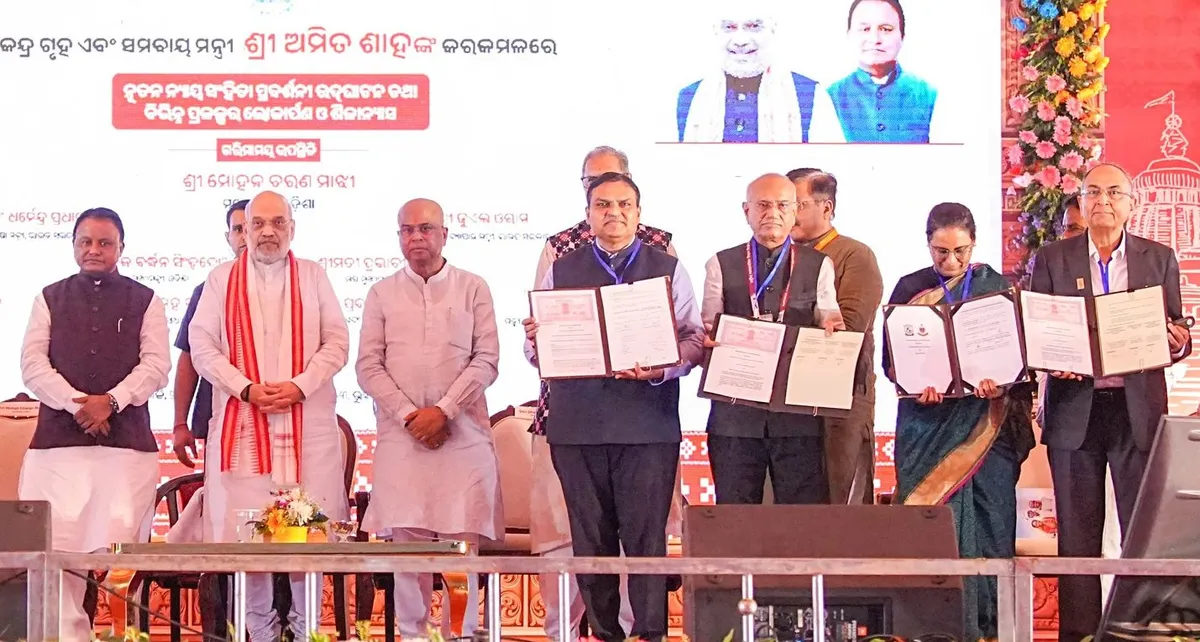
What does the future hold for the Amul-style cooperative model in Odisha? Recently, Union Home Minister Amit Shah inaugurated and laid the foundation stones for development projects worth more than Rs 3,770 crore in the state, signaling a significant push towards establishing dairy cooperatives across villages.
The projects, which include initiatives from the National Dairy Development Board (NDDB) and the Odisha State Cooperative Milk Producers’ Federation (OMFED), aim to enhance the cooperative sector’s role in transforming rural economies in Odisha. Shah emphasized that the cooperative sector will play a central role in this transformation.
During his address, Shah highlighted the potential of Odisha to expand dairy and fisheries activities through cooperative institutions. He noted that Amul, which does business worth Rs 1.3 lakh crore, has successfully benefited women cattle herders in Gujarat, showcasing the model’s effectiveness.
In addition to dairy, the government plans to launch a campaign to establish dairy cooperatives across villages in Odisha. This initiative is expected to empower local farmers and improve their livelihoods.
Shah also inaugurated a new sulphuric acid stream at the Indian Farmers Fertiliser Cooperative Limited (IFFCO) unit in Paradeep, further supporting agricultural initiatives in the region. The cooperative model has historically played a transformative role in strengthening rural economies in India.
Union Minister of State for Fisheries, Animal Husbandry and Dairying George Kurian expressed support for transforming Kerala’s MatsyaFed into a national-level cooperative institution akin to Amul. He stated, “If the Kerala government proposes a comprehensive development plan, the Centre would extend financial and technical support to scale up MatsyaFed into a nationwide cooperative framework.”
Shah’s vision includes enriching the lives of tribal and OBC mothers and sisters in Odisha, aiming to explore the full potential of the state in dairy and fisheries.
As these initiatives unfold, 690 beneficiaries are expected to receive training, with 400 women set to undergo leadership and entrepreneurship training. The cooperative sector’s expansion in Odisha could significantly impact local economies.
While the details of these initiatives are promising, the full scope of their implementation remains to be seen. The cooperative sector’s role in transforming rural economies will be closely monitored in the coming months.
Overall, the developments in Odisha reflect a broader commitment to enhancing the cooperative model, which has proven successful in other states like Gujarat.