Introduction
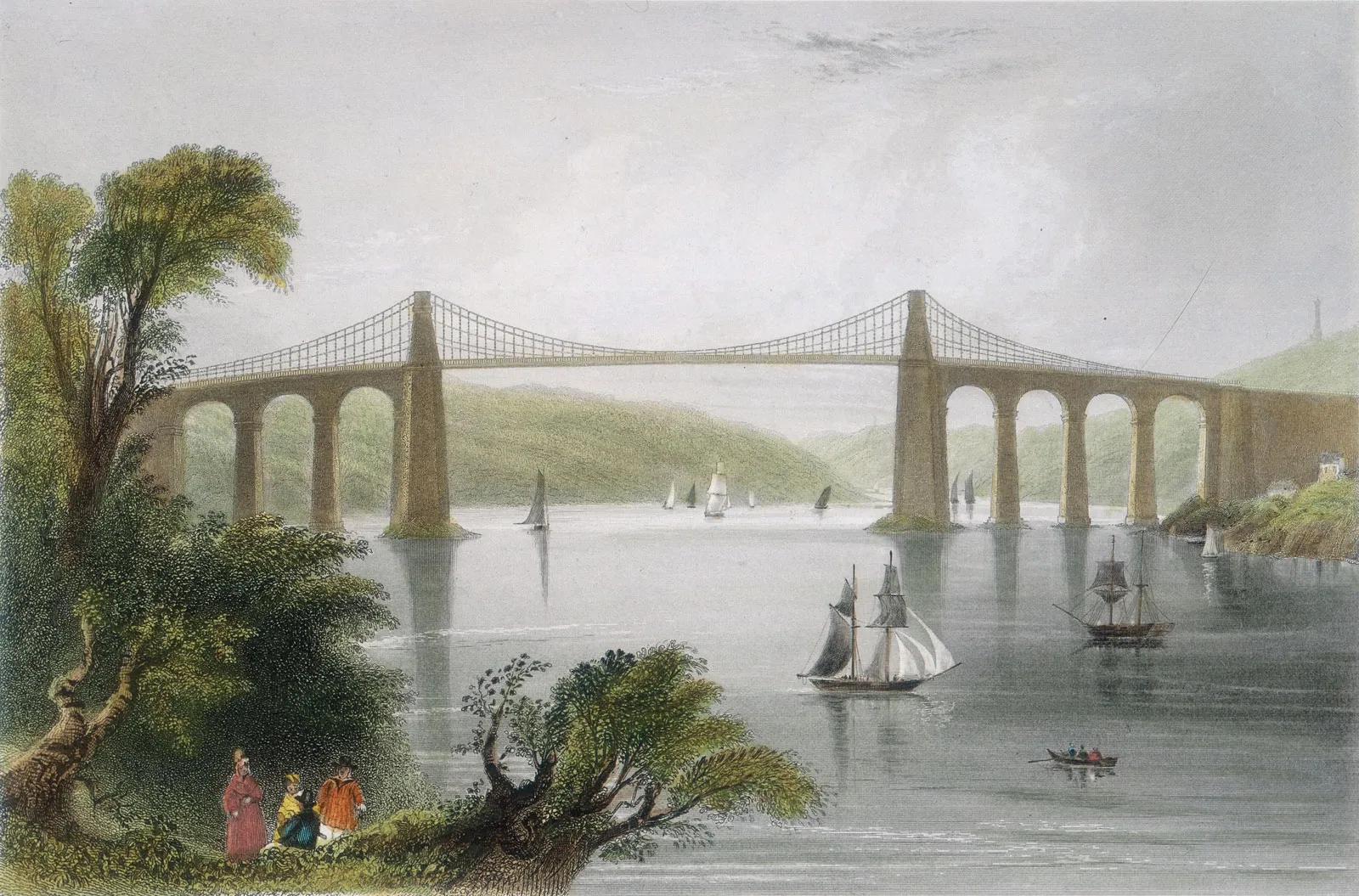
The Menai Bridge, a stunning piece of 19th-century engineering, holds immense significance in both transportation and cultural heritage in Wales. Spanning the Menai Strait, it connects Anglesey to the mainland, playing a vital role in local travel and the economy of the region. With its intricate design and historical relevance, the bridge is not only a vital thoroughfare but also an iconic landmark that attracts tourists and historians alike.
Historical Background
Designed by the renowned engineer Thomas Telford, the Menai Bridge was completed in 1826. At the time, it was a groundbreaking achievement, as it featured a unique design that safeguarded the strong tidal currents of the Menai Strait. The bridge measures 1,500 feet in length with a main span of 579 feet, making it one of the longest suspension bridges of its time.
Initially constructed to facilitate the transport of goods between Anglesey and the mainland, the Menai Bridge has witnessed the evolution of transport over nearly two centuries. Its engineering marvel set the stage for future infrastructure projects and defined transport in the region.
Recent Events and Developments
In recent years, the Menai Bridge has undergone restoration work to improve its structural integrity and accommodate increasing traffic levels. The Welsh Government announced funding for maintenance efforts in 2022, reflecting the bridge’s status as a priority for cultural preservation and modernisation.
Efforts are also underway to enhance visitor access and promote the bridge as a significant tourist attraction. The area surrounding the bridge features picturesque walks, historical information panels, and viewing points that highlight its engineering significance. Interest in the heritage and history of the bridge surged during the pandemic, leading to increased awareness of its cultural value.
Conclusion
As we look to the future, the Menai Bridge remains a vital link not just for transportation but also as a symbol of Welsh engineering prowess and historical significance. Efforts to maintain and promote the bridge not only honour its past but also ensure that it continues to play a crucial role in connecting communities for generations to come. The importance of such landmarks cannot be overstated, as they serve as tangible connections to our shared history and cultural identity.