Introduction
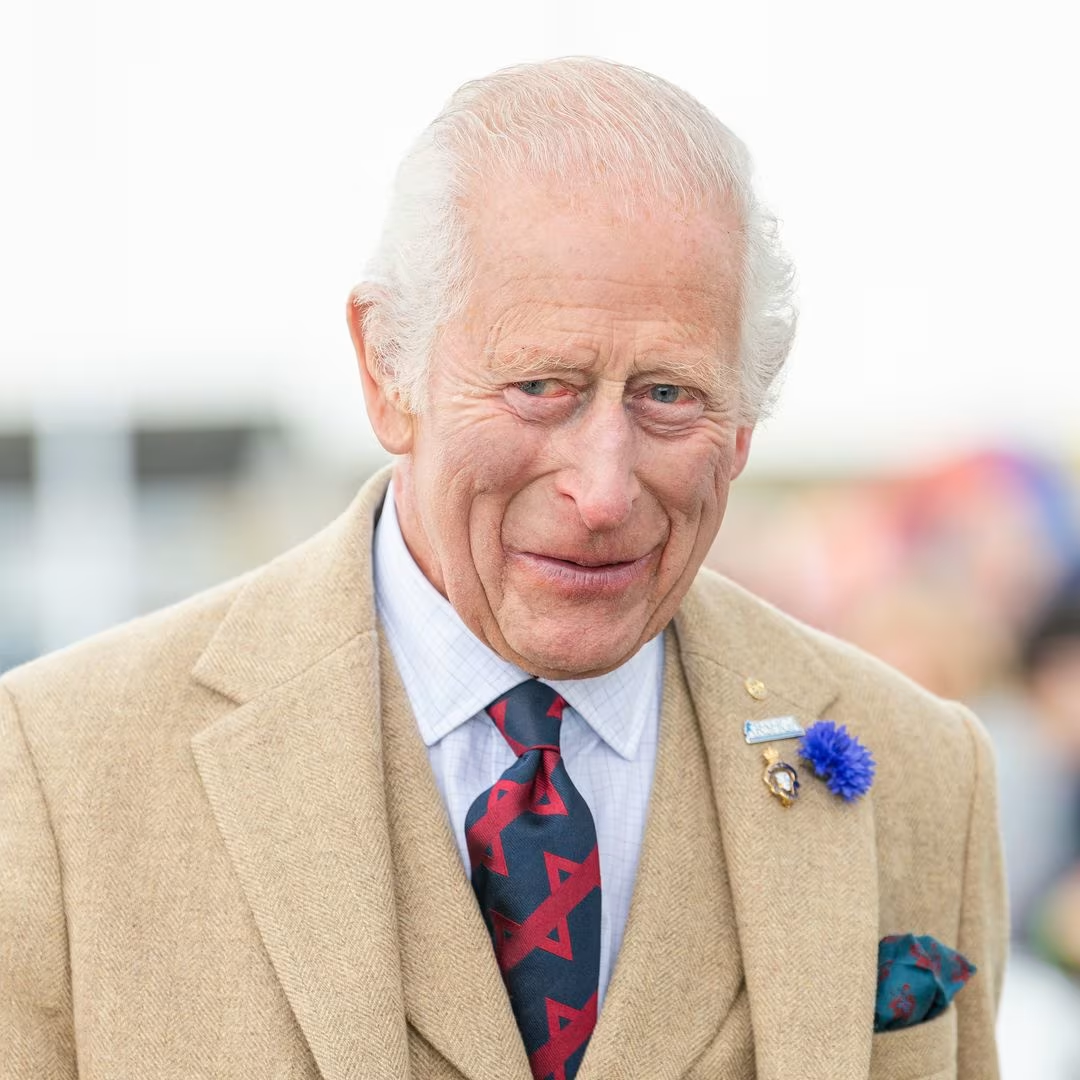
Prince Edward, the youngest child of Queen Elizabeth II and Prince Philip, Duke of Edinburgh, has marked his presence in the British royal family through various public services and dedication to charitable work. His role is significant not just as a member of the royal family but also as a representative of the modern monarchy, showcasing its adaptability in the contemporary world.
Personal Background
Born on March 10, 1964, Prince Edward was educated at prestigious institutions, including Eton College and the University of Cambridge, where he studied History. After a brief stint in the entertainment industry, including producing a documentary for the BBC, he found his calling in public service. In 1999, he was appointed the Earl of Wessex.
Public Engagements and Charitable Work
Prince Edward has undertaken numerous royal engagements over the years. He is known for his commitment to various charities, including his role as Chair of the Duke of Edinburgh’s Award scheme, an international self-development programme for young people. He also supports organisations focused on theatre and arts, reflecting his initial career interests. Recently, he has promoted UK heritage through collaborations with various charities and organisations.
Recent Events
In recent months, Prince Edward has participated in several high-profile engagements, particularly to commemorate the late Queen Elizabeth II’s legacy. He attended events to honour her memory and has been involved in discussions about the future of the monarchy. As the world adapts to changes post-Queen Elizabeth’s passing, his role has gradually been adjusting to reflect the new dynamics within the royal family.
Conclusion
Prince Edward’s contributions to the monarchy and public life illustrate the continuing evolution of royal duties in the modern era. His active engagement in charity work and representation of the royal family at important national occasions highlights the new responsibilities undertaken by the younger royals. As the monarchy continues to navigate through unprecedented changes, Prince Edward remains a key figure, embodying both tradition and innovation that are crucial for the future stability of the institution.