Introduction
The Islamic Revolutionary Guard Corps (IRGC) plays a critical role in Iran’s political, military, and economic landscape. As an elite military force established after the 1979 Iranian Revolution, the IRGC has evolved into a significant influencer within Iran and across the region. Its activities, particularly in recent years, have drawn international attention and condemnation, especially amidst rising tensions between Iran and Western powers.
The Role and Structure of the IRGC
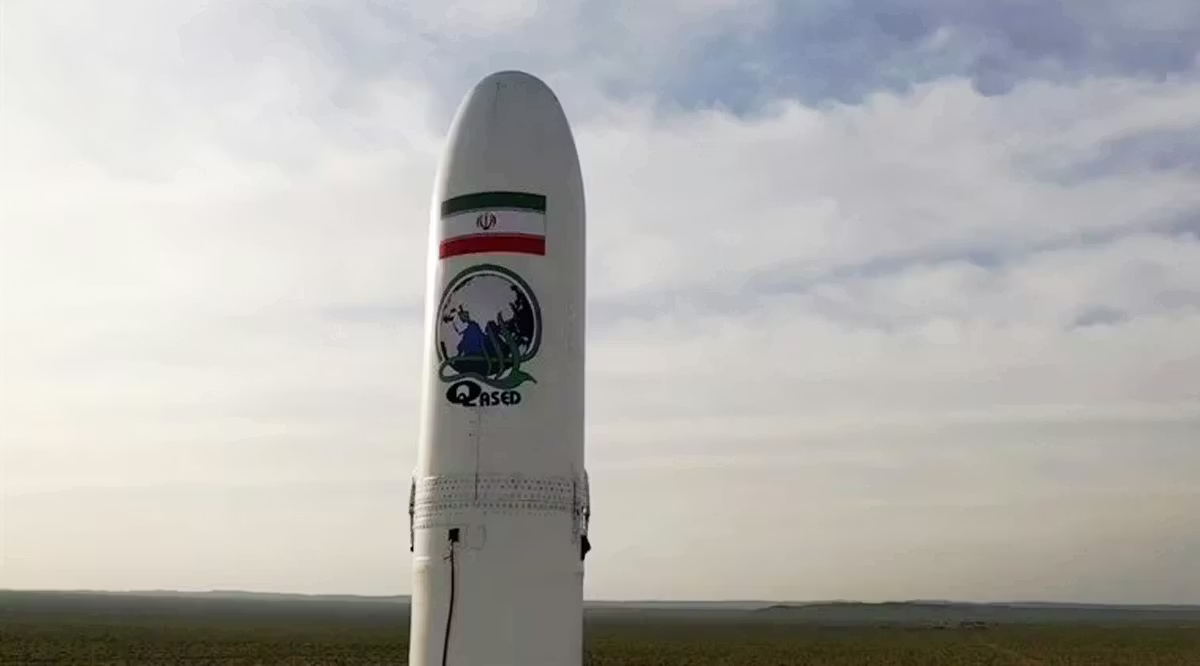
The IRGC was formed to safeguard the gains of the revolution and maintain Iran’s Islamic regime. Unlike regular military forces, the IRGC has its own ground, aerospace, and naval branches, operating independently of Iran’s regular army. Additionally, the IRGC oversees various paramilitary groups, such as the Basij, and is crucial in Iran’s missile and nuclear programs.
Political Influence
The IRGC’s influence extends beyond military might. It has significant sway in economic sectors, controlling various businesses and industries in Iran. Recent reports indicate that the IRGC and its affiliated companies have amassed considerable wealth and power, impacting policy decisions and national economic strategies. This presence results in complex relationships with civilian politicians, often dictates social policies, and shapes Iran’s foreign relations.
Recent Developments
On a regional scale, the IRGC has been actively involved in various proxy wars and support for militias across the Middle East, including in Iraq, Syria, Lebanon, and Yemen. The US government’s designation of the IRGC as a terrorist organisation in 2019 has heightened tensions and complicated diplomatic efforts. In response, Iran has remained defiant, continuing its stated commitment to support its allies in the region, further increasing its military budget.
Consequences for International Relations
The actions of the IRGC have profound implications for international stability and security. With ongoing conflicts in Syria and Iraq, and tensions with Israel and Gulf states, the IRGC’s engagement continues to escalate scenarios that may lead to military confrontations. Analysts believe that the unity and cohesion within the IRGC are essential for Iran’s government, especially amid internal dissent and pressures from sanctions.
Conclusion
The IRGC remains a pivotal institution within Iranian society, crucial for the regime’s longevity and influence in the region. As global stakes rise, understanding the IRGC’s role will be essential for international actors aiming to address the challenges posed by Iran. Observers forecast that as tensions escalate, the IRGC’s relevance will only increase, making it a significant actor to monitor in both Gulf geopolitics and broader Middle Eastern affairs.