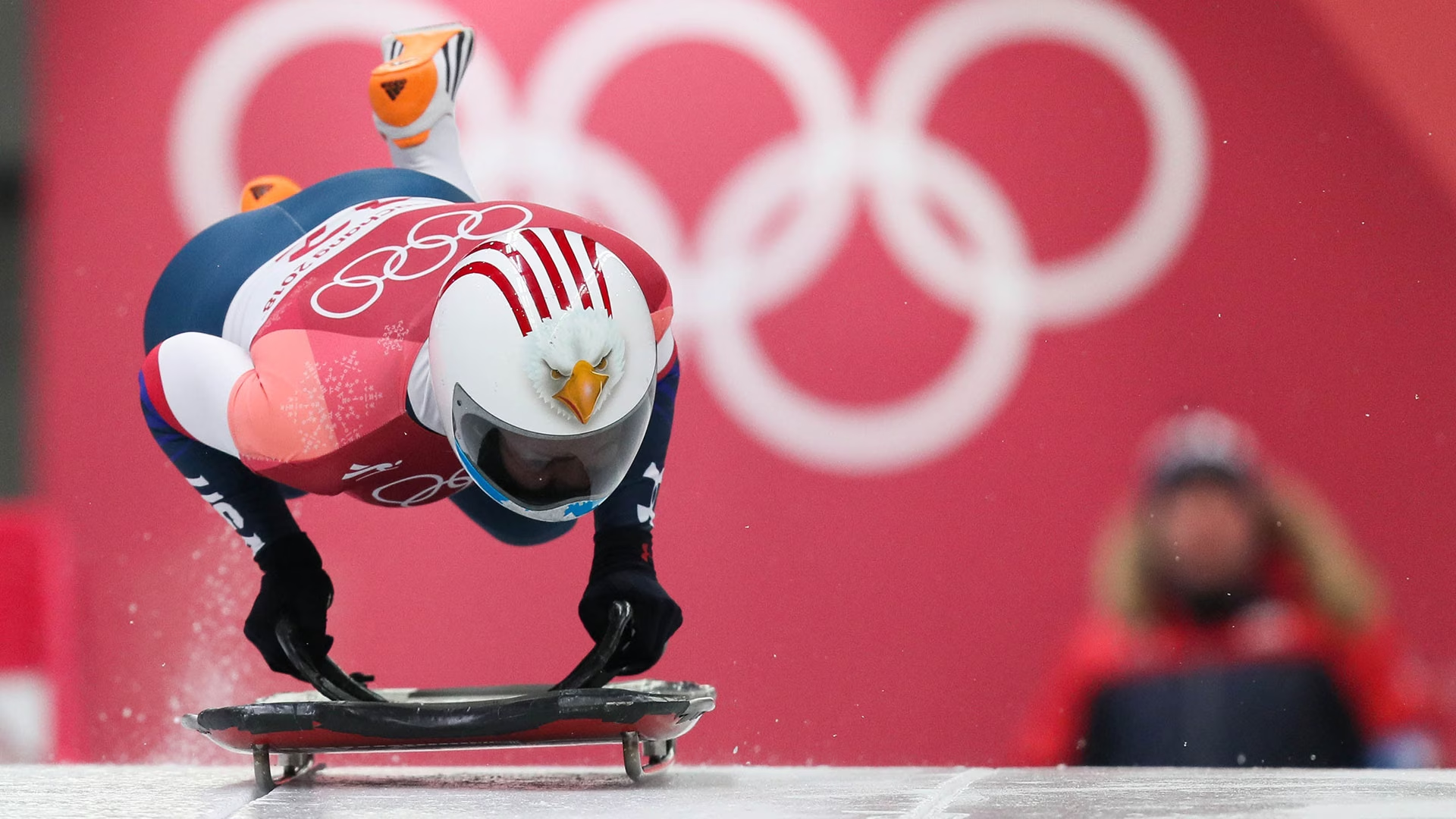
Introduction to Skeleton at the Winter Olympics
The Winter Olympics, held every four years, showcase a variety of snow and ice sports, among which skeleton stands out for its thrilling nature and high-speed competition. As a key event in the bobsleigh family, skeleton involves athletes racing down a narrow, twisting track on a small sled whilst lying face down. The significance of skeleton is not only its excitement but also its deep-rooted history and the test of human skill it embodies.
History and Development of Skeleton
Skeleton made its Olympic debut in 1928, held in St. Moritz, Switzerland. The sport emerged much earlier, originally being developed in the late 19th century in the mountainous regions of Europe where winter sports flourished. Since its introduction to the Olympics, skeleton has undergone various changes, evolving in terms of equipment, technique, and safety measures. It was temporarily removed from the Olympic program after the 1948 Games but returned at the 2002 Salt Lake City Winter Olympics, where it has remained a prominent fixture ever since.
Recent Events and Notable Competitors
The most recent Winter Olympics held in Beijing in February 2022 showcased some fierce competition. Dominating performances came from the likes of Great Britain’s own Hannah Proctor and Australia’s Jackie Narracott, who brought forth thrilling races that kept audiences on the edge of their seats. Notably, the men’s event was electrified with the astonishing speed of Alexander Tretiakov from Russia, who managed to secure a podium spot. The athletes not only represent their nations but also the enduring spirit of competition in winter sports.
Looking Forward: The Future of Skeleton
As the Winter Olympics continue to evolve, so does the sport of skeleton. Current discussions involve the potential for increased participation and representation of nations traditionally less involved in winter sports. With advancements in technology and training, future competitions will likely witness even faster and more thrilling races. Fans eagerly anticipate the next Winter Olympics in 2026, set to be held in Milan and Cortina d’Ampezzo, where the excitement surrounding skeleton will undoubtedly continue to grow, inspiring a new generation of athletes and enthusiasts alike.
Conclusion
Skeleton at the Winter Olympics embodies the pinnacle of speed, skill, and daring as athletes navigate challenging courses at incredible velocities. With a rich history and an exciting future, this sport remains a thrilling spectacle for spectators and competitors. It has become a significant part of the Winter Olympics legacy, promising more adrenaline-filled moments in years to come.