Introduction
The Rugby World Rankings serve as a critical gauge to determine the relative strength of national teams in the sport of rugby union. These rankings not only influence the seedings for tournaments but are also significant in shaping perceptions regarding team performance and competitiveness. As the Rugby World Cup approaches, understanding the dynamics of the rankings is crucial for fans, players, and stakeholders alike.
Recent Changes in Rankings
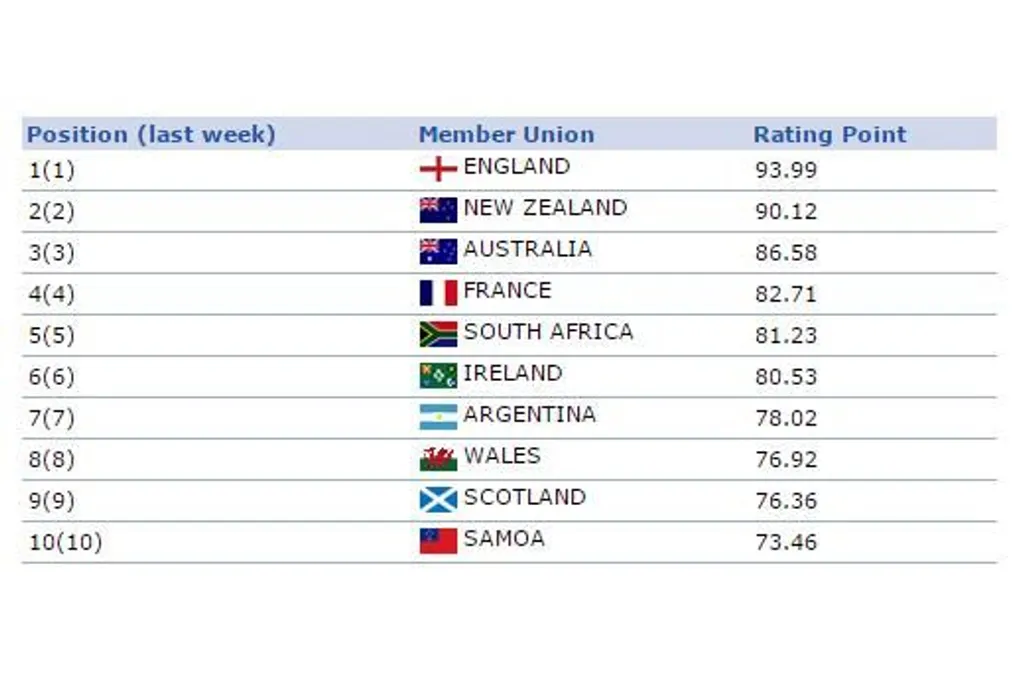
As of October 2023, the Rugby World Rankings have seen substantial shifts following the conclusion of the latest international test matches. New Zealand has reclaimed the top position, overtaking South Africa after a series of impressive performances. The All Blacks secured their place with crucial wins over both Australia and Argentina. South Africa, despite their recent loss to New Zealand, remains a formidable force, sitting in second place.
France, who are gearing up to host the Rugby World Cup, currently stands at third in the rankings. Their consistent performances leading to the tournament have cemented their reputation as one of the favourites. England, currently ranked fourth, has shown signs of improvement and could potentially disrupt the top ranks with upcoming matches ahead of the world cup.
Impact of Rankings on Teams
The rankings greatly affect strategic planning for teams as they prepare for the World Cup. Higher-ranked teams not only enjoy better seedings but also tend to face weaker opponents in the early knockout stages. For instance, a top-4 ranking could potentially mean avoiding a strong competitor until the semi-finals, a critical advantage in tournament settings.
Furthermore, the rankings can motivate teams towards achieving higher levels of performance. The pursuit of climbing higher in the rankings often fuels competition both within teams and against opponents, driving them to refine strategies, enhance training regimes, and improve overall teamwork.
Conclusion
In conclusion, as the Rugby World Cup approaches, the significance of the Rugby World Rankings cannot be overstated. They provide insights into the competitive landscape of the sport and highlight trends and trajectories of participating nations. For fans and analysts, these rankings are not just figures but are indicative of the journey towards one of the most prestigious tournaments in rugby. As preparations continue, it will be interesting to see how teams respond to their current standings and strive for excellence in the world arena.